
 ChatGPT

The Photo That Made You Look Twice
It usually happens with a candid photo. A friend snaps you laughing at dinner, and later you notice the outer corners of your downturned eyes dipping towards your cheeks, making you look sleepier than you felt.
For some people, that slope has been there since childhood. For others, it crept in as the brow and upper lid began to settle. Either way, it is normal and nothing to fix unless you want to change it.
This guide from Vivid Clinic in Istanbul, Turkey explains what creates the look, how it compares with upturned eyes, simple makeup tricks, and the non-surgical and surgical options, including an honest look at the fox eye lift. If you would like a professional opinion, you can book a free consultation with a plastic surgeon, with no obligation to treat anything.
7 Essential Facts at a Glance
- Downturned eyes have outer corners that sit lower than the inner corners.
- The look is often inherited and is a normal variation of eye shape.
- With age, a heavier outer brow and lid can create or deepen the slope.
- Makeup can visually lift the outer corner in minutes.
- Anti-wrinkle injections and threads give temporary lift only.
- A fox eye lift raises the outer brow and corner area, but it does not suit everyone.
- Surgery carries real risks, so a careful consultation comes first.
What Are Downturned Eyes?
Quick Answer: Downturned eyes are eyes whose outer corners sit slightly lower than their inner corners, so an imaginary line across the eye tilts downwards towards the temple. The look is often genetic, can also develop with age, and is a normal eye shape rather than a medical problem.
Picture a line from the inner corner of your eye to the outer corner. If it slopes down as it travels outwards, you are looking at downturned eyes. The effect often looks stronger when you are tired.
Many people find this shape warm and approachable. Others feel it makes them look tired even after a full night of sleep.
A Quick Word on Canthal Tilt
The angle of that imaginary line is often called the canthal tilt. When the outer corner sits higher, the tilt is described as positive; when it sits lower, the eye gives the appearance of a negative tilt. Our guide to the fox eye lift and canthal tilt covers the angle in more depth.
What Causes Downturned Eyes?
Most cases come from the anatomy you were born with, the changes that come with time, or a little of both.
Genetics and Natural Anatomy
If your parents share the same slope, the shape is likely inherited. The position of the outer corner tendon, the eye socket bone and the way the lids drape all play a part. This version is usually stable from early adulthood.
Age-Related Changes Around the Outer Eye
With age, the tail of the brow tends to descend more than the inner brow, because there is less muscle support on the outer side. Extra upper lid skin can then fold over the outer corner. The lower lid and its supporting tendon may also loosen, letting the corner drift down and out.
Together, these changes can create or deepen a downward slope, often noticed in the late thirties or forties.
How to Tell Which One You Have
Compare current photos with ones from your twenties. If the shape looks the same, it is probably genetic. If the outer brow has dropped, ageing is likely contributing.
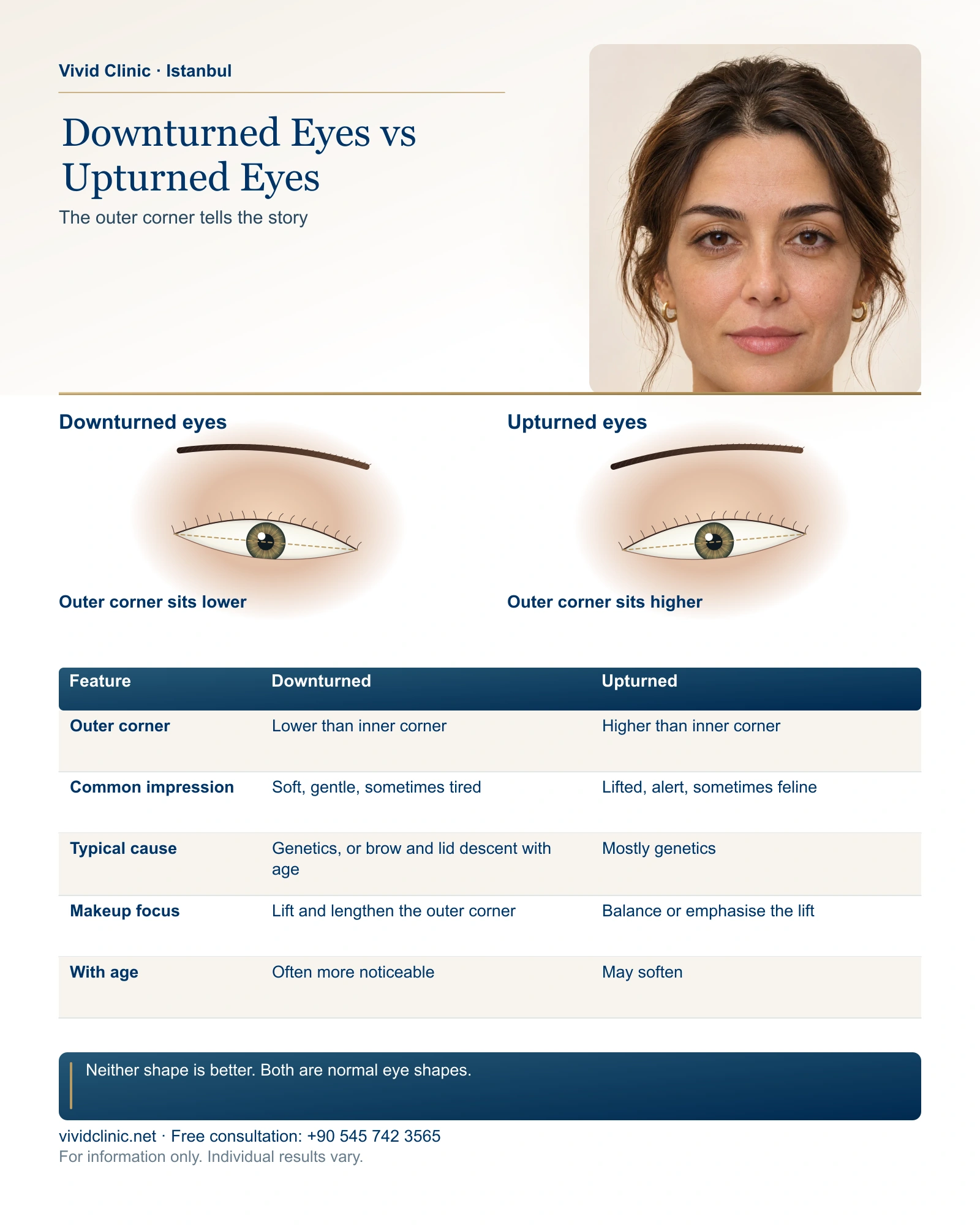
Downturned Eyes vs Upturned Eyes
Quick Answer: The difference between downturned eyes vs upturned eyes is the direction of the outer corner. Upturned eyes rise slightly towards the temple, while downturned eyes dip slightly. Neither is better; they simply create a different expression and respond to different makeup and treatment approaches.
| Feature | Downturned Eyes | Upturned Eyes |
|---|---|---|
| Outer corner position | Lower than the inner corner | Higher than the inner corner |
| Common impression | Soft, gentle, sometimes tired | Lifted, alert, sometimes feline |
| Typical cause | Genetics, or brow and lid descent with age | Mostly genetics |
| Makeup focus | Lift and lengthen the outer corner | Balance or emphasise the existing lift |
| Change with age | Often becomes more noticeable | May soften as tissues settle |
Eye shapes overlap: downturned eyes can also be hooded, deep set or monolid. Our overview of the types of eyes shows how these categories combine.
Do Downturned Eyes Need Treatment?
Quick Answer: No. Downturned eyes are a normal variation and do not need correcting. Treatment is a personal choice for people who want a more lifted look or who are bothered by age-related heaviness, and an honest surgeon will tell you when makeup or no treatment at all is the better answer.
At Vivid Clinic, the first question is what would make you feel more like yourself. Sometimes the answer is a new brow shape.
Makeup Tips for Downturned Eyes
Makeup is the fastest, lowest-risk option. The principle: draw attention upwards and outwards.
Eyeliner
- Draw a short wing that angles towards the tail of your brow rather than following the lower lash line.
- Keep liner thin at the inner corner and slightly thicker towards the outer third.
- Avoid heavy liner on the outer lower lash line, which can exaggerate the downward slope.
Eyeshadow and Lashes
- Place the deepest shade on the outer third of the lid and blend it upwards, not outwards and down.
- A light, matte shade under the brow arch adds lift.
- Curl lashes and focus mascara on the outer lashes, or use a short outer-corner lash strip.
Brows
A brow tail that ends level with or slightly above the start of the brow helps the whole eye look lifted.
Non-Surgical Options for a Lifted Look
Two non-surgical approaches are commonly discussed. Both are temporary and work best for mild cases.
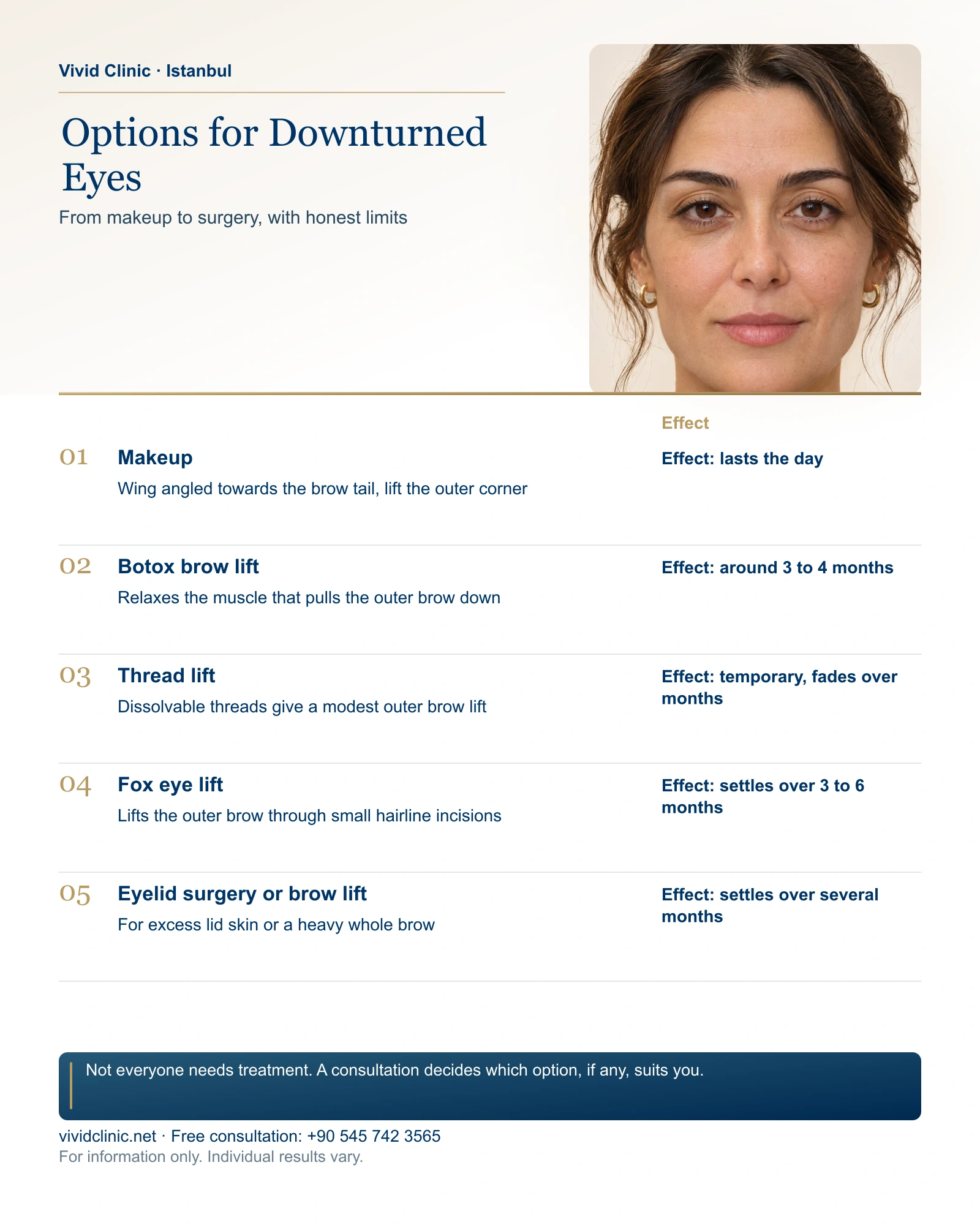
Botox Brow Lift
Small amounts of anti-wrinkle injection placed in the muscle that pulls the outer brow down can let the brow tail rise a few millimetres. This is often called a chemical or non-surgical brow lift. Results appear within one to two weeks and last around three to four months. Read more about Botox in Turkey.
Thread Lifts
Dissolvable threads placed near the temple can give a modest, temporary outer brow lift that fades over several months. Risks include visible or palpable threads, dimpling, asymmetry and infection, so careful assessment matters.
Neither option tightens the outer corner tendon or removes excess lid skin, so age-related downturned eyes may only soften for a while.
What Is a Fox Eye Lift?
Quick Answer: A fox eye lift is a surgical procedure that lifts the outer brow and the soft tissue around the outer eye, usually through small incisions hidden in the temporal hairline. The aim is a subtly lifted, elongated look. Results vary, and it is not suitable for everyone.
The fox eye lift targets the area that creates a downward slope: the brow tail and outer corner region. Done conservatively, it can make the eyes look more rested. Done too aggressively, it can look unnatural or affect eye closure.
Fox Eye Lift Versus Canthoplasty
These terms are often confused. A fox eye lift mainly repositions the outer brow and temple tissue. A canthopexy tightens the outer corner tendon without detaching it, while a canthoplasty detaches and repositions that tendon to change the corner itself.
Canthoplasty is more involved and carries more risk, including asymmetry, a rounded or webbed corner, lower lid malposition and dry eye. Many surgeons reserve it for functional or reconstructive needs.
Brow Lift and Eyelid Surgery as Alternatives
If the whole brow has descended, a brow lift in Turkey may suit you better than a fox eye lift. If excess upper lid skin is the main cause, eyelid surgery can remove it and reduce the heavy, downward look.
Who Is a Good Candidate for a Fox Eye Lift?
- Healthy adults with mild to moderate outer brow descent
- People with downturned eyes who want a subtle lift rather than a dramatic change
- Those with realistic expectations who understand the risks
- Non-smokers, or people willing to stop well before surgery
Who Should Think Twice
A fox eye lift is generally not advised for people with significant dry eye, uncontrolled medical conditions, active eye infection, or a strong wish to copy a trending look. If the main issue is excess eyelid skin or a heavy whole brow, other procedures are usually more effective. Pregnancy and breastfeeding are also reasons to wait.
How the Fox Eye Lift Technique Works
The procedure is usually performed under local anaesthesia with sedation, or general anaesthesia, depending on the plan. The surgeon makes small incisions inside the temporal hairline, lifts the tissue over the outer brow, and secures it at a slightly higher position. Sutures or small fixation methods hold the tissue while it heals.
If the outer corner tendon is lax, the surgeon may discuss adding a canthopexy. Every adjustment is checked for symmetry and comfortable eye closure.
Procedure Overview Table: Fox Eye Lift
| Aspect | Details |
|---|---|
| Duration Process | About 1 to 2 hours, longer if combined with other procedures |
| Hospitalization Duration | Usually same day discharge; sometimes 1 night |
| Mobility Duration | Walking the same day |
| Return to Activity | 7 to 14 days for most daily and desk activities |
| Complete Recovery | 4 to 8 weeks for most swelling to settle; strenuous exercise after about 3 to 4 weeks |
| Anticipated Results | Early change visible within weeks; settled result at around 3 to 6 months |
Timings are general estimates. Recovery depends on your anatomy, procedure plan and healing response.
Recovery Timeline After a Fox Eye Lift
First 48 Hours
Swelling, tightness and mild bruising are common, and the eyes may look over-lifted at first. Cool compresses and sleeping with the head raised help.
First Week
Swelling usually peaks around day two or three. Stitches may be removed at around seven to ten days. Avoid bending, heavy lifting and makeup near the incisions.
Weeks Two to Six
The lifted look gradually relaxes towards its final position, and many people return to social plans. Strenuous exercise waits for your surgeon’s approval.
Three to Six Months
Residual swelling settles and the result becomes easier to judge. Tissues keep ageing, so results can soften over time.
Benefits of a Fox Eye Lift
- A subtly lifted outer brow and corner area
- A more rested and open appearance for some people
- Small incisions placed within the hairline
Benefits vary between patients, and results are not identical for everyone.
Possible Risks and Side Effects
Swelling, bruising and temporary numbness at the temples are common. Possible risks include asymmetry, visible scarring, hair loss around incisions, infection, nerve irritation, over-correction and early relapse. Dry eye and difficulty closing the eyes fully can occur, especially if the outer corner is changed. Your surgeon will explain how these risks apply to you.
How to Prepare for Surgery
- Share your full medical history, medications and supplements.
- Stop smoking several weeks before and after surgery, as advised.
- Ask whether to pause blood-thinning medicines or supplements.
Aftercare Tips
- Keep your head elevated while sleeping for the first week.
- Use lubricating eye drops if recommended.
- Avoid saunas, swimming and heavy exercise until cleared.
- Do not rub your eyes or wear eye makeup until approved.
- Seek urgent advice for sudden pain, vision changes or increasing swelling.
Cost Factors in Istanbul, Turkey
Costs vary from person to person. The main factors are:
- Whether you need a fox eye lift alone or combined with a brow lift or eyelid surgery
- Whether a canthopexy or other corner procedure is required
- The type of anaesthesia and the hospital setting
- The surgeon’s experience
- Accommodation, transfers and follow-up included in your package
For an early idea, try the surgery price calculator, then confirm details during your consultation.
Why Choose Vivid Clinic?
Quick Answer: Vivid Clinic offers honest, personalised planning in Istanbul, Turkey, including clear advice on when surgery is not needed, and organised support for international patients from the first message to remote aftercare.
You can meet our doctors, browse the before and after gallery, and begin with a free consultation with a plastic surgeon before you decide anything.
What International Patients Can Expect
Most fox eye lift patients stay in Istanbul for around seven to ten days, so stitches can be checked before flying. Expect written aftercare, a review appointment and a direct line to the team.
Operation Process Overview at Vivid Clinic
Your journey with Vivid Clinic begins when you arrive in Istanbul, where a VIP airport transfer takes you to your 5-star hotel for check-in and rest. Next comes your one-on-one consultation, where the surgeon assesses your brow, eyelids and outer corners, reviews your medical history, and explains whether a fox eye lift, a brow lift, eyelid surgery, a non-surgical option or no treatment makes most sense. On surgery day, the plan is carried out carefully with a focus on safety, comfort and natural balance. Post-operative care starts straight away, with written instructions and a direct contact line. A checkup visit before your departure confirms that healing is on track, and remote aftercare follow-up continues once you are back home.
FAQs
How long should I stay in Istanbul for a fox eye lift to lift downturned eyes?
Most patients who choose a fox eye lift for downturned eyes plan to stay in Istanbul for around seven to ten days. This allows time for the consultation, surgery, the first days of swelling, and a checkup where stitches can be removed or reviewed before you fly. If the fox eye lift is combined with eyelid surgery or a brow lift, your surgeon may suggest a slightly longer stay. Your coordinator at Vivid Clinic will suggest dates based on your plan, and remote aftercare continues after you return home. Individual recovery varies.
Can a Botox brow lift improve downturned eyes without surgery, and how long does it last?
A Botox brow lift can help mild downturned eyes by relaxing the muscle that pulls the outer brow down, allowing the brow tail to rise slightly. The change is usually a few millimetres, so it suits people who want a subtle refresh rather than a clear reshaping. Results tend to appear within one to two weeks and last around three to four months, after which treatment can be repeated if you wish. It cannot remove extra eyelid skin or tighten the outer corner tendon, so it is less effective when ageing is the main cause. A doctor checks your brow position first, because poor placement can make the brows look uneven.
What is the difference between a fox eye lift and canthoplasty for downturned eyes?
A fox eye lift mainly lifts the outer brow and the soft tissue near the temple, which can make downturned eyes look more lifted without cutting the outer corner of the eye itself. A canthoplasty is different: the surgeon detaches and repositions the tendon at the outer corner to change its angle. A canthopexy sits in between, tightening the tendon without detaching it. Canthoplasty is more invasive and carries higher risks, including asymmetry, a rounded or webbed corner, lower lid problems and dry eye. Your surgeon will explain which approach, if any, matches your anatomy and expectations.
Are downturned eyes caused by ageing better treated with a fox eye lift or eyelid surgery?
It depends on what is creating the slope. When downturned eyes come mainly from a descended outer brow, a fox eye lift or a brow lift may give the most natural improvement. When the main issue is excess upper lid skin folding over the outer corner, eyelid surgery is often more effective, because a lift alone will not remove that skin. Many people have a mix of both, which is why some patients combine procedures. At your consultation, the surgeon examines your brow position, lid skin and outer corner tone, often comparing older photos, before recommending a plan. Sometimes the honest advice is a non-surgical option or no treatment.
What affects the cost of treating downturned eyes in Turkey?
The cost of treating downturned eyes depends mostly on which procedure fits your anatomy. Makeup and brow shaping cost little, while anti-wrinkle injections are repeated every few months. A fox eye lift, brow lift or eyelid surgery involves the surgeon’s experience, anaesthesia, the hospital setting and the length of the operation. Adding a canthopexy or combining procedures changes the total. Package inclusions such as hotel nights, VIP transfers and follow-up visits also affect the final figure. Vivid Clinic provides a personalised quote after reviewing your photos and goals, and the online price calculator can give you an early idea before your consultation.
Conclusion
Understanding downturned eyes starts with knowing that there is nothing wrong with them. Whether your gentle slope is inherited or has developed with age, you can work with it through makeup, try a temporary non-surgical lift, or explore surgery such as a fox eye lift, brow lift or eyelid surgery with clear eyes about the limits and risks.
Vivid Clinic in Istanbul, Turkey offers a free consultation with a plastic surgeon to talk through your goals with no pressure. Request your free consultation and get an honest, personal view of your options.
Real Before and After Results at Vivid Clinic
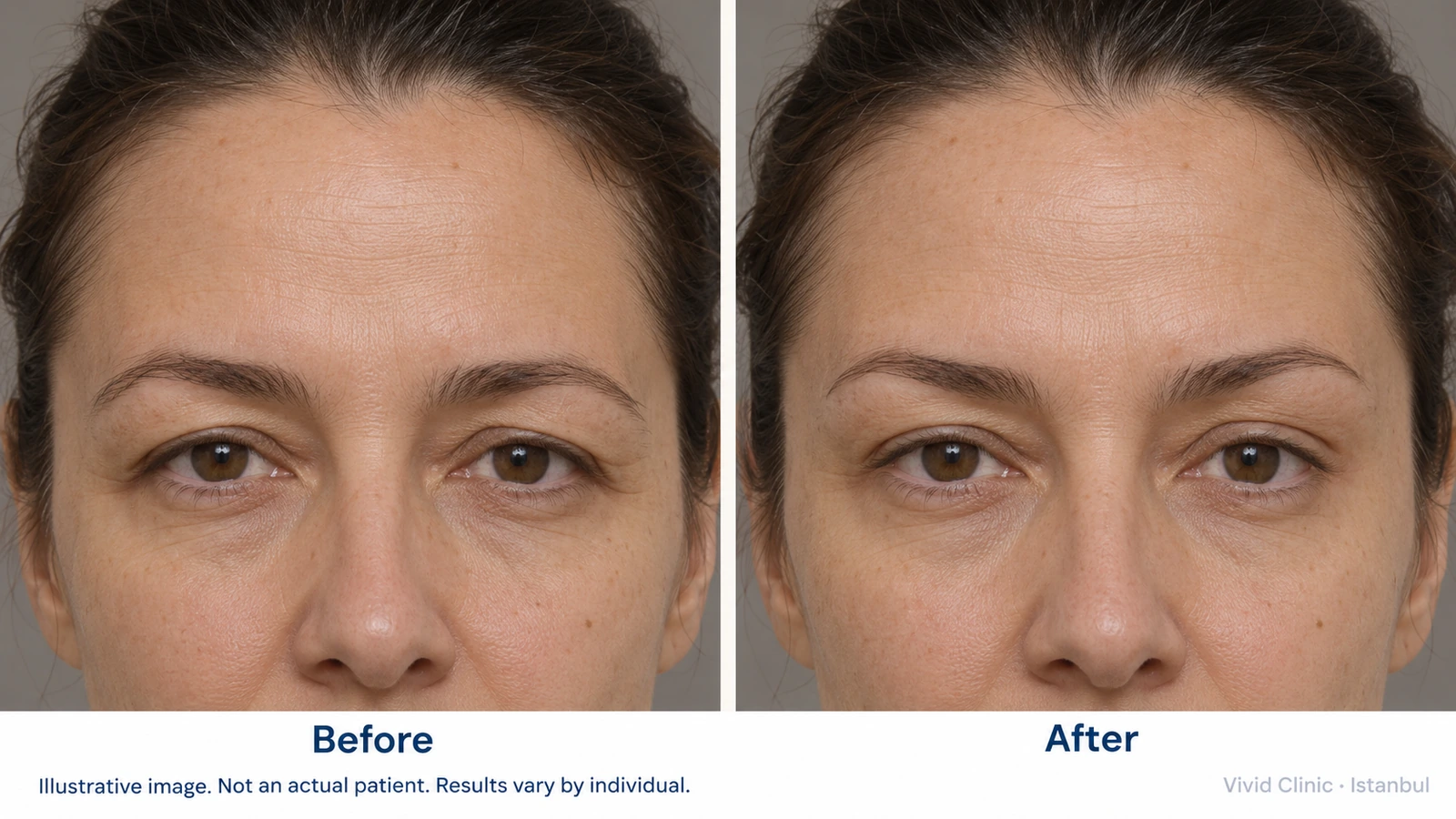
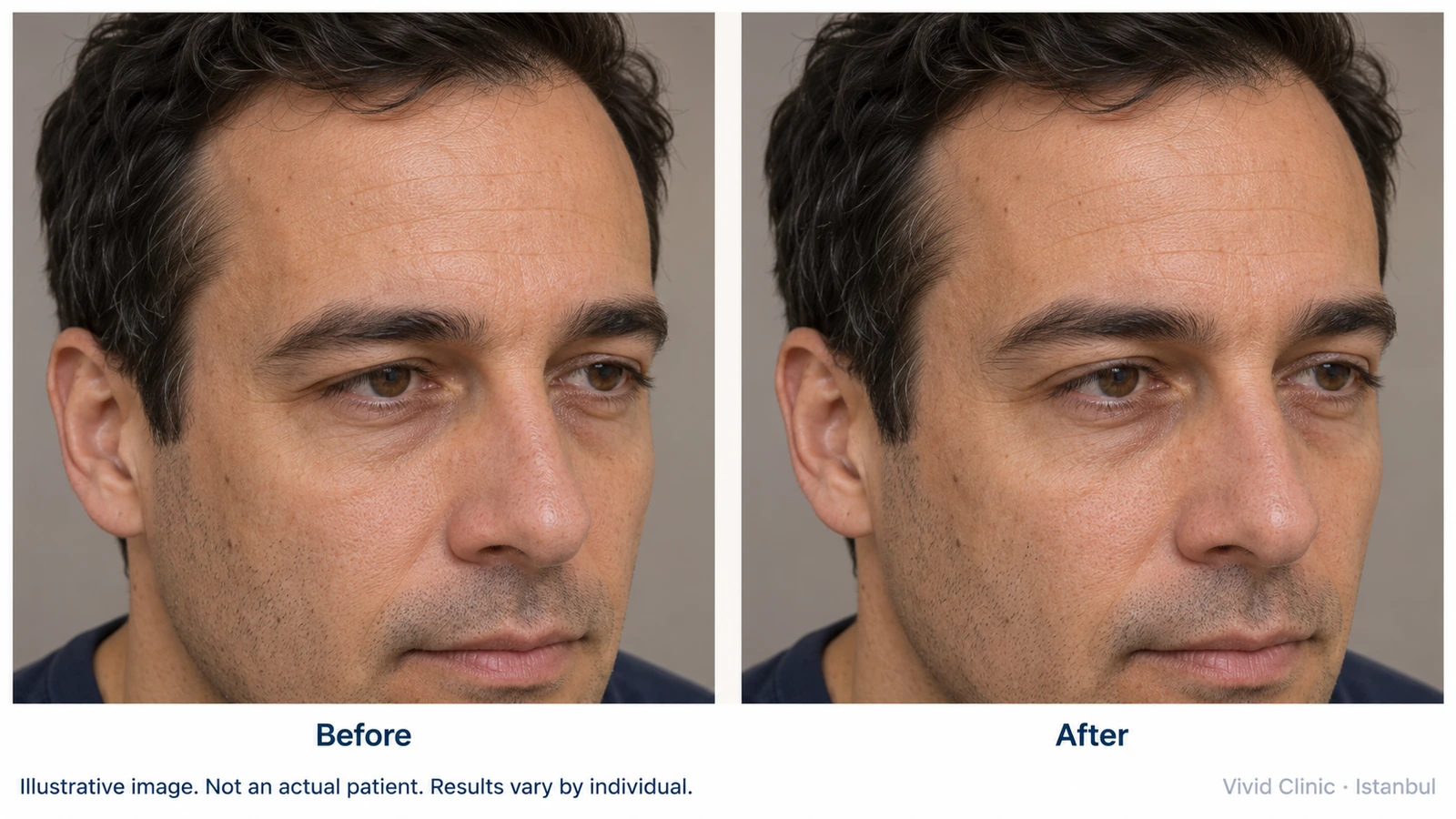
The photos below show real Vivid Clinic patients from the clinic’s own gallery, shared with consent as published on the clinic site. Please note that these are eyelid surgery cases, not fox eye lift cases, because the clinic does not yet have consented fox eye lift photos to share; results vary by anatomy, healing and treatment plan.
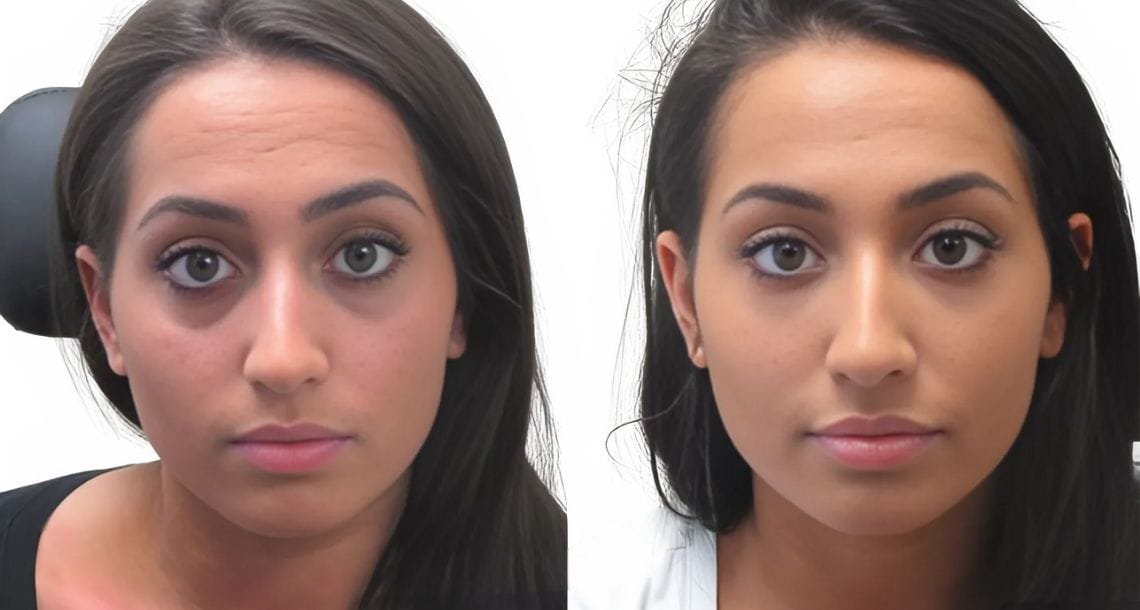
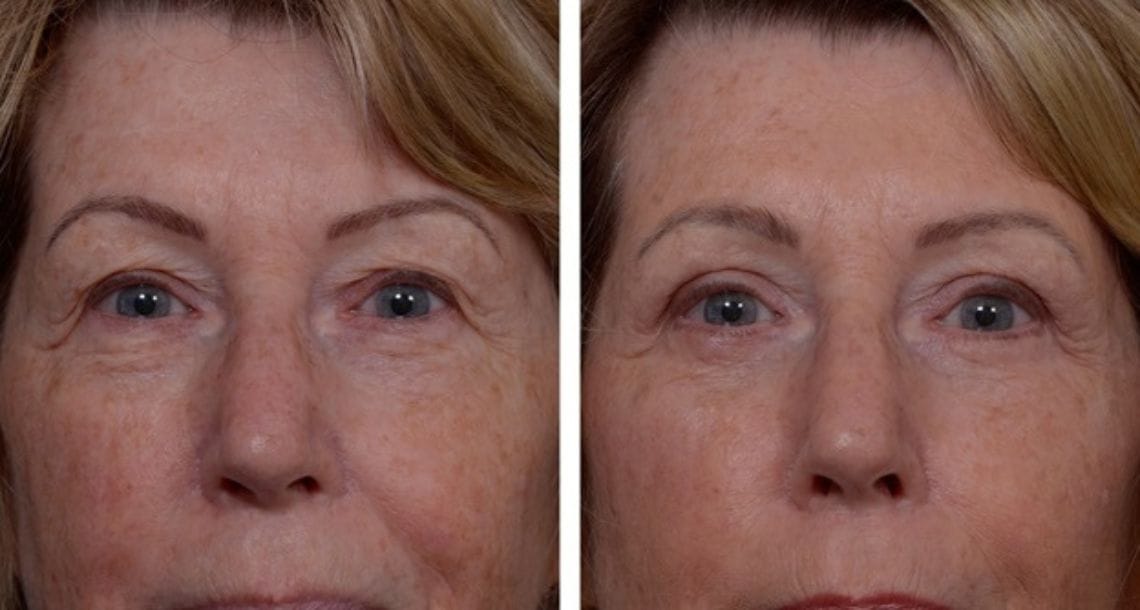
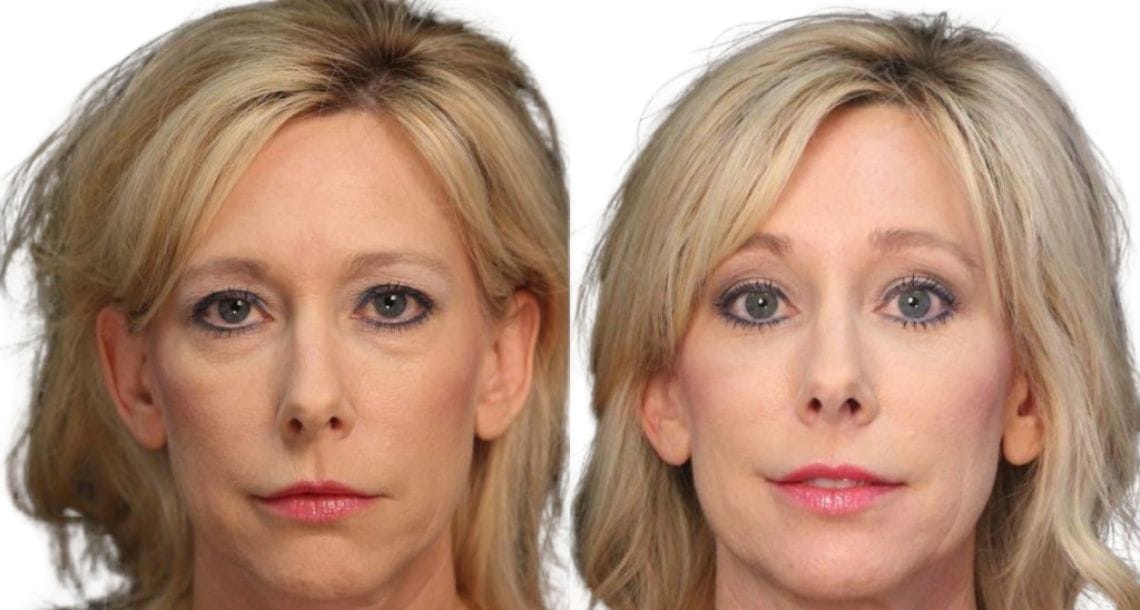
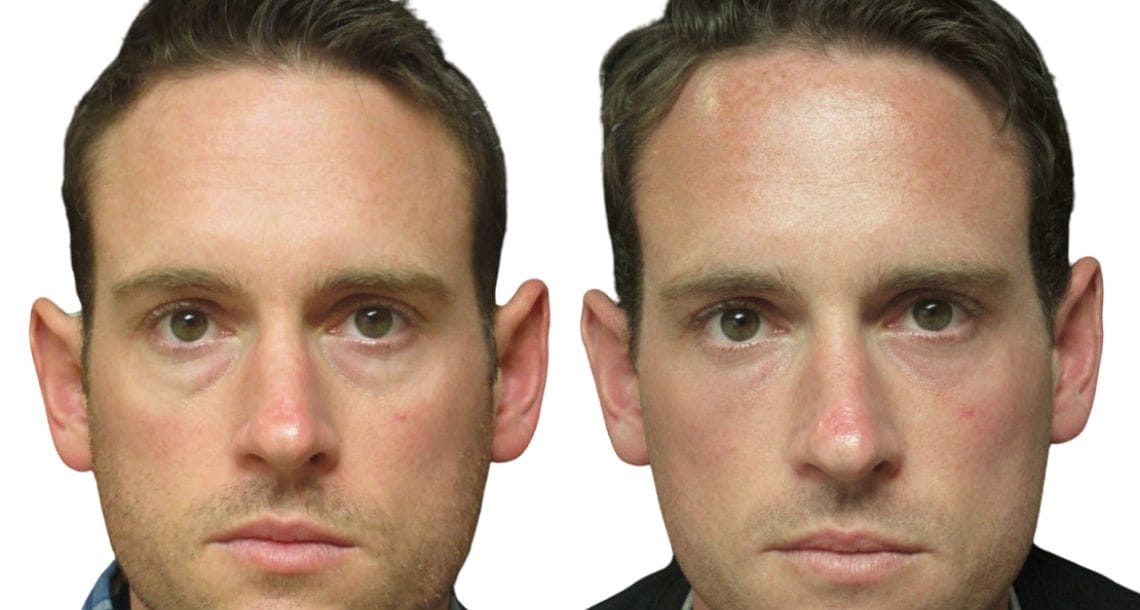
You can explore more cases in the full Vivid Clinic before and after gallery and the blepharoplasty before and after gallery. To discuss your own eyes, ask for a free quote and the team will arrange your consultation.
This article is for general information and does not replace a personal medical consultation. Suitability, risks, recovery and expected results should always be discussed with a qualified medical professional. Results vary by individual.