 ChatGPT

The Jawline That Frames Every Photo
Turn your head slightly toward a window and watch the light slide along your face. If it catches a clean corner below each ear and draws a firm, straight line toward your chin, you have a square jaw. It is one of the features cameras love, and one that sculptors and portrait painters have admired for centuries.
Yet the same strong angles can feel too wide in some selfies, too heavy under certain hairstyles, or simply not quite “you”. Some people want a softer, more tapered lower face. Others love their square jawline and want it a little sharper as the years soften its edges.
This guide from Vivid Clinic in Istanbul, Turkey explains what creates a square jaw, how it compares with other jawline types, and six options people consider to soften or sharpen it. Treatment is entirely optional. If you would like a professional view of your own anatomy, you can book a free consultation with a plastic surgeon, with no pressure to change anything.
What Is a Square Jaw?
Quick Answer: A square jaw is a lower face with a broad, well-defined jaw angle below each ear and a relatively straight jawline running to a wide or flat chin. The width usually comes from bone shape, from the size of the chewing muscles, or from both. It is a normal and often admired facial feature.
From the front, the width at the jaw angles is close to the width at the cheekbones, so the lower face looks stable rather than tapered.
The Anatomy Behind a Square Jawline
Two structures do most of the work. The first is the mandible, or lower jawbone, especially the angle where the vertical and horizontal parts meet. A more flared or outward angle creates more width.
The second is the masseter, the thick chewing muscle that sits over the jaw angle on each side. A large masseter adds soft-tissue bulk exactly where the jaw looks widest, so a square jawline can be partly muscle rather than bone.
Why a Square Jaw Reads as Strong
Across many cultures, a defined jaw is linked with health, confidence and youth, because sharp lower-face contours tend to soften with age. In men, a square jaw is often seen as classically masculine. In women, it can look striking and editorial.
A square jaw is not a flaw. For many people, the goal is harmony with their other features, not a different face.
Square Jaw vs Other Jawline Types
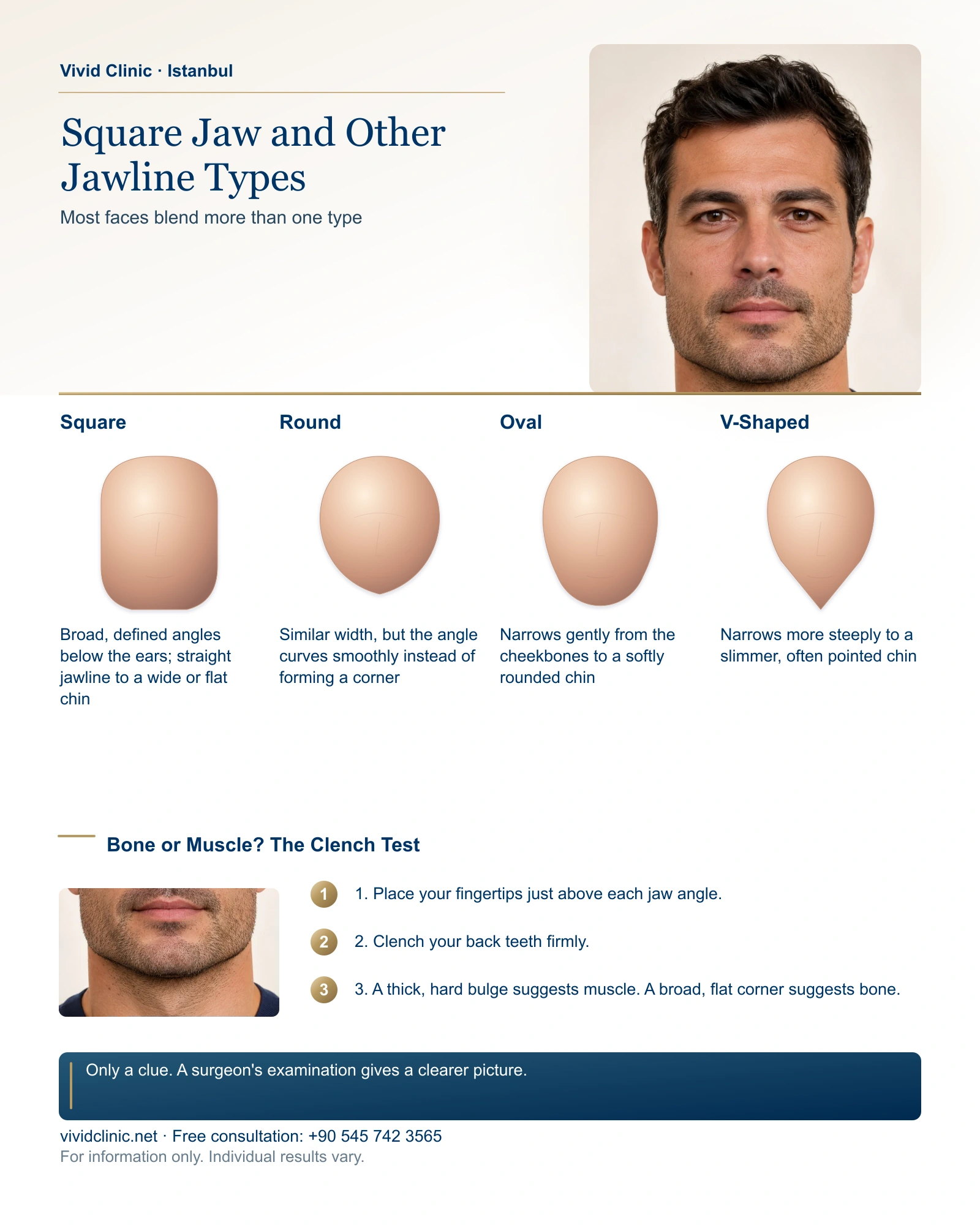
Quick Answer: Jawline types are usually described as square, round, oval, V-shaped or tapered, and soft or less defined. A square jaw is the widest at the angles with the straightest lines, while oval and V-shaped jaws narrow gradually toward the chin.
Square vs Round
A round jaw is often similar in width, but the angle curves smoothly instead of forming a corner.
Square vs Oval and V-Shaped
An oval jaw narrows gently from the cheekbones to a softly rounded chin. A V-shaped or tapered jaw narrows more steeply to a slimmer, often pointed chin. These are the shapes some people aim for when they want to soften a square jaw. Our blog also covers oval face shape and heart shaped face in separate guides, published alongside this one.
Square vs a Wide Jaw From Muscle
A wide jaw caused mainly by large masseter muscles can look square at rest but feels different to the touch. The bulk sits over the jaw angle and becomes firmer when you clench. This distinction matters, because muscle and bone respond to very different treatments.
What Causes a Wide or Square Jaw?
Genetics and Bone Structure
The shape of your mandible is largely inherited. A wide angle and a broad chin often run in families.
Masseter Size and Clenching
Habitual clenching, grinding at night (bruxism), or heavy chewing such as frequent gum use can enlarge the masseter over time, much like any trained muscle.
Ageing, Weight and Skin
With age, skin loosens, fat pads shift and jowls can form along the jawline. This may blur a once-crisp square jawline or, in some faces, make the lower face look heavier.
How to Tell Bone From Muscle: The Clench Test
Place your fingertips just in front of and above each jaw angle, then clench your back teeth firmly. If you feel a thick, hard bulge pushing outward, the masseter contributes noticeably to your width.
If the area stays fairly flat but the corner of the jaw still feels broad and solid, bone shape may be the main factor. This is only a clue; a surgeon’s examination gives a clearer picture.
Does a Square Jaw Need Treatment?
Quick Answer: No. A square jaw is a normal facial shape and needs no treatment. Some people choose to soften width caused by large chewing muscles, or to sharpen a jawline that has blurred with age, but these are personal aesthetic choices, not medical necessities.
A careful surgeon will often suggest the smallest step that matches your goal, or no treatment at all.
Who Might Consider Treatment
- Healthy adults with clear, realistic goals for the lower face
- People with a wide jaw caused largely by prominent masseter muscles
- Those whose jawline has lost definition through ageing or jowling
- People who feel their chin looks small or set back compared with a strong jaw
Who Is Not a Good Candidate
Botulinum toxin is usually avoided during pregnancy or breastfeeding, with certain neuromuscular conditions, or with infection at the injection site. Surgery calls for good general health, realistic expectations and stable weight.
How to Soften a Square Jaw
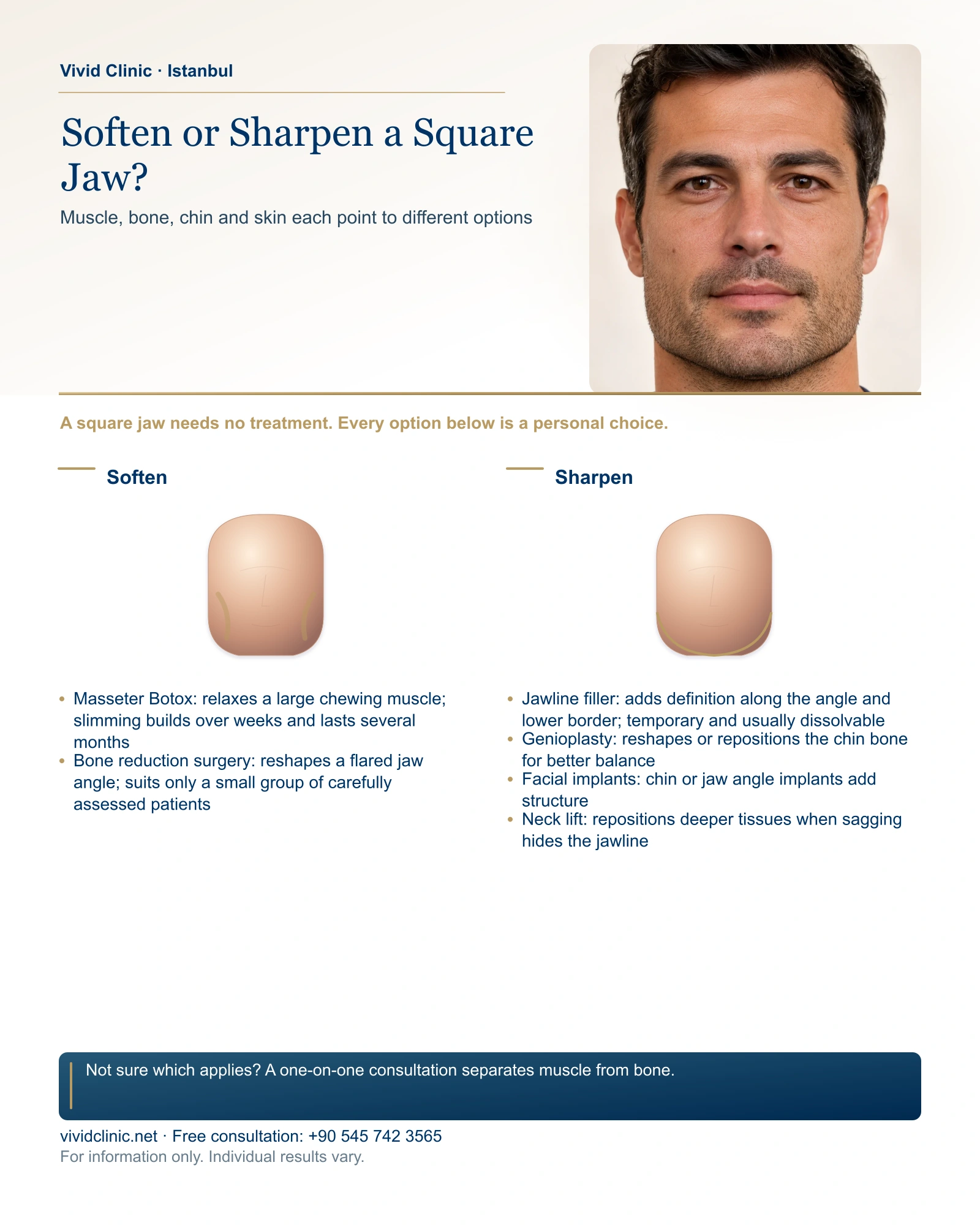
Softening aims to reduce width at the jaw angles so the lower face tapers a little more toward the chin.
Masseter Botox for Jaw Slimming
Botox injections into the masseter relax the muscle. Over the following weeks, a less active muscle can gradually become smaller, which may slim the lower face when muscle is a major part of the width. The effect typically builds over several weeks and lasts several months, so repeat sessions are usually needed to maintain it.
Masseter Botox does not change bone, so if your width is mostly skeletal, the visible change will be modest. Doses differ between toxin brands; see our Botox vs Dysport comparison. Our separate guide to masseter Botox, published on the blog this week, goes into more detail.
When Clenching or Bruxism Is Part of the Picture
Some people notice less clenching discomfort after masseter Botox. However, using botulinum toxin for bruxism may be off-label in some countries, so a doctor decides whether it is appropriate for you. A dental assessment is also wise, because a night guard or other dental care may be needed alongside or instead of injections.
Bone Reduction Surgery
When width comes mainly from a flared jaw angle, some surgeons perform mandible angle reduction, a surgical procedure that reshapes the bone, usually through incisions inside the mouth. It is a significant operation with longer recovery and specific risks, including nerve-related numbness. It suits only a small group of carefully assessed patients.
How to Sharpen a Square Jawline
Sharpening aims to restore definition along the jaw and balance the chin with it.
Jawline Filler
Hyaluronic acid dermal fillers can be placed along the jaw angle and lower border to add definition. This suits people whose jaw has softened or who want a crisper corner without surgery. Results are temporary, and most hyaluronic acid fillers can be dissolved if needed. A dedicated jawline filler guide is also published on our blog.
Chin Balancing With Genioplasty
A strong square jaw can make a small or recessed chin look even smaller. Genioplasty reshapes or repositions the chin bone to improve projection and proportion. Our guide to chin types explains how the chin interacts with the rest of the lower face.
Facial Implants
Facial implants, such as chin or jaw angle implants, add structure where bone is underdeveloped. They are a longer-lasting option than filler, but they involve surgery and their own risks, so careful planning matters.
When Sagging Hides the Jaw
If loose skin and jowls are what blur a square jawline, filler alone may not help much. In that case, a surgeon may discuss a deep plane neck lift for a defined jawline, which repositions deeper tissues of the lower face and neck.
Non-Surgical or Surgical?
Most people start with adjustable, non-surgical options. Surgery makes sense mainly for bone shape, chin proportion or significant sagging, and in many cases it is not needed.
How Masseter Botox Is Performed
The appointment usually starts with a short assessment while you clench and relax your jaw, so the doctor can map the muscle. The skin is cleaned, and a few small injections are placed into the lower, bulkiest part of each masseter, avoiding nearby muscles that control your smile.
The injections take only minutes, with a brief pinching sensation. A review appointment a few weeks later lets the doctor check symmetry and plan future doses.
Procedure Overview Table: Masseter Botox (Jaw Slimming)
| Aspect | Details |
|---|---|
| Duration Process | 15 to 30 minutes, including assessment |
| Hospitalization Duration | Not required |
| Mobility Duration | Immediate |
| Return to Activity | Same day; avoid strenuous exercise and massaging the jaw for about 24 hours, or as advised |
| Complete Recovery | 1 to 3 days for minor redness, swelling or small bruises to settle |
| Anticipated Results | Gradual slimming over about 4 to 8 weeks, typically lasting several months |
Timings are general estimates. Results vary by individual.
Recovery Timeline After Masseter Botox
Treatment Day
Small bumps at the injection points usually settle within an hour or two. Most people return to normal plans straight away.
Weeks One and Two
The muscle begins to relax. Chewing tough foods may feel a little more tiring for a while, which is expected and usually eases.
Weeks Two to Eight
Visible slimming, if it occurs, develops gradually as the muscle becomes less bulky.
Months Three to Six
The effect slowly fades as muscle activity returns. Your doctor will advise whether and when a repeat session makes sense.
Benefits of Tailored Jaw Treatment
- A softer or more defined lower face that still looks like you
- Plans that respect the natural strength of a square jaw
- For some people, relief of clenching discomfort, as judged by a doctor
Benefits vary between patients, and no treatment can create an entirely different face shape.
Possible Risks and Side Effects
Every option carries risk. Masseter Botox can cause bruising, tenderness, headache, chewing fatigue and, if the toxin affects nearby muscles, a temporary change in your smile. Over-treatment can leave the area looking hollow.
Filler can cause swelling, bruising, lumps or asymmetry, and a rare but serious risk is filler entering a blood vessel. Genioplasty, implants and bone reduction carry surgical risks such as infection, swelling, numbness, asymmetry and implant movement. Discuss each one with your surgeon before deciding.
How to Prepare for Your Appointment
- Share your full medical history, medications and supplements.
- Ask whether to pause blood-thinning supplements or medicines.
- Mention any jaw pain, clenching or dental work.
- For surgery, stop smoking well in advance, as advised.
Aftercare Tips for a Smoother Result
- Keep your head upright for a few hours after injections.
- Avoid massaging, facials or pressure on the jaw for about a day.
- After surgery, follow diet, oral hygiene and swelling instructions closely.
- Seek urgent advice for increasing pain, skin colour change or difficulty swallowing.
Cost Factors in Istanbul, Turkey
Quick Answer: The cost of treatment depends on the option you choose, the product or surgical technique, the number of areas treated and what your travel package includes. Vivid Clinic gives a personalised quote after reviewing your photos and goals.
The main factors are:
- Whether you choose injections, filler, implants or surgery
- The toxin or filler product and the amount needed
- Surgical technique, operating time and anaesthesia
- Combined procedures, such as chin and jaw work together
- Accommodation, transfers and follow-up in your package
For an early estimate, try the surgery price calculator, then confirm details during your consultation.
Why Choose Vivid Clinic for a Square Jaw?
Quick Answer: Vivid Clinic offers anatomy-led planning in Istanbul, Turkey, honest advice that separates muscle from bone, and organised support for international patients from first contact to remote aftercare.
You can meet our doctors, browse the before and after gallery, and start with a free consultation with a plastic surgeon before deciding anything. The team will tell you plainly if your square jaw is best left as it is.
What International Patients Can Expect
Masseter Botox or filler fits into a short stay of a few days, with a remote review once the effect develops. Genioplasty or facial implants usually need around seven to ten days in Istanbul before flying home, depending on healing.
Operation Process Overview at Vivid Clinic
Your journey with Vivid Clinic begins when you arrive in Istanbul, where a VIP airport transfer takes you to your 5-star hotel for check-in and time to rest. Next comes your one-on-one consultation, where the doctor examines your jaw angles, masseter muscles, chin projection and skin, and explains whether masseter Botox, filler, chin surgery, implants or no treatment at all suits you. On treatment or surgery day, every step is planned carefully for comfort and a natural result. Post-operative care, with written instructions and a direct contact line, follows straight away. A checkup visit before your departure confirms that everything is on track, and remote aftercare follow-up continues once you are back home.
FAQs
How long should I stay in Istanbul for square jaw treatment?
It depends on the option you choose. For masseter Botox or jawline filler, two to three days is usually enough for your consultation, treatment and a short check before flying. Genioplasty or facial implants usually need around seven to ten days in Istanbul, so early swelling and stitches can be checked before you travel. Your coordinator at Vivid Clinic will suggest dates once your plan is clear, and remote aftercare continues after you return home. Individual recovery varies.
When will I see a slimmer square jaw after masseter Botox?
Masseter Botox works gradually, not overnight. In the first one to two weeks the muscle relaxes, and chewing tough foods may feel slightly more tiring. Visible slimming of a square jaw, when muscle is a major cause, usually develops over roughly four to eight weeks as the masseter becomes less bulky. The effect typically lasts several months before muscle activity returns, so repeat sessions are often planned to maintain it. If your width comes mostly from bone, the change will be smaller.
Can jawline filler make a square jaw look more defined without surgery?
Yes, for the right person. Hyaluronic acid filler placed along the jaw angle and lower border can sharpen a square jaw that has softened with age, or add a crisper corner where definition is mild. It works best when skin quality is good and sagging is limited. Filler cannot lift heavy jowls, and too much product can make the lower face look wide or heavy, so a conservative approach matters. Results are temporary and most hyaluronic acid fillers can be dissolved if needed.
Is masseter Botox suitable for a square jaw caused by bone?
Usually it is only partly helpful. Botox relaxes the masseter muscle, so it can soften a square jaw when large chewing muscles add much of the width. It does not change bone, so if a flared jaw angle is the main cause, the visible slimming will be modest. A clench test gives a clue: a thick bulge that hardens when you bite suggests muscle. For mainly skeletal width, some surgeons discuss bone reduction, while others suggest balancing the chin instead, so the jaw looks less dominant.
What affects the cost of square jaw treatment in Turkey?
The cost depends on your plan rather than the shape of your square jaw itself. Masseter Botox is shaped mainly by the product and dose, and filler by the amount of product and number of areas. Surgical options such as genioplasty or facial implants add operating time, anaesthesia, hospital setting and implant type. Combining chin and jaw treatments changes the total, as do package inclusions like hotel nights, VIP transfers and follow-up. Vivid Clinic provides a personalised quote after reviewing your photos, and the online price calculator gives an early idea before you plan travel.
Conclusion
A square jaw is a strong, natural feature that gives a face structure and presence. For many people, it is a defining part of their look, and the best decision is to leave it exactly as it is.
If muscle has widened your lower face, masseter Botox may soften it. If age has blurred your square jawline, filler, chin balancing, implants or a neck lift may restore definition, depending on your anatomy. Vivid Clinic in Istanbul, Turkey offers a free consultation with a plastic surgeon to talk it through without pressure. Request your free consultation for an honest, personal view of your options.
Real Before and After Results at Vivid Clinic
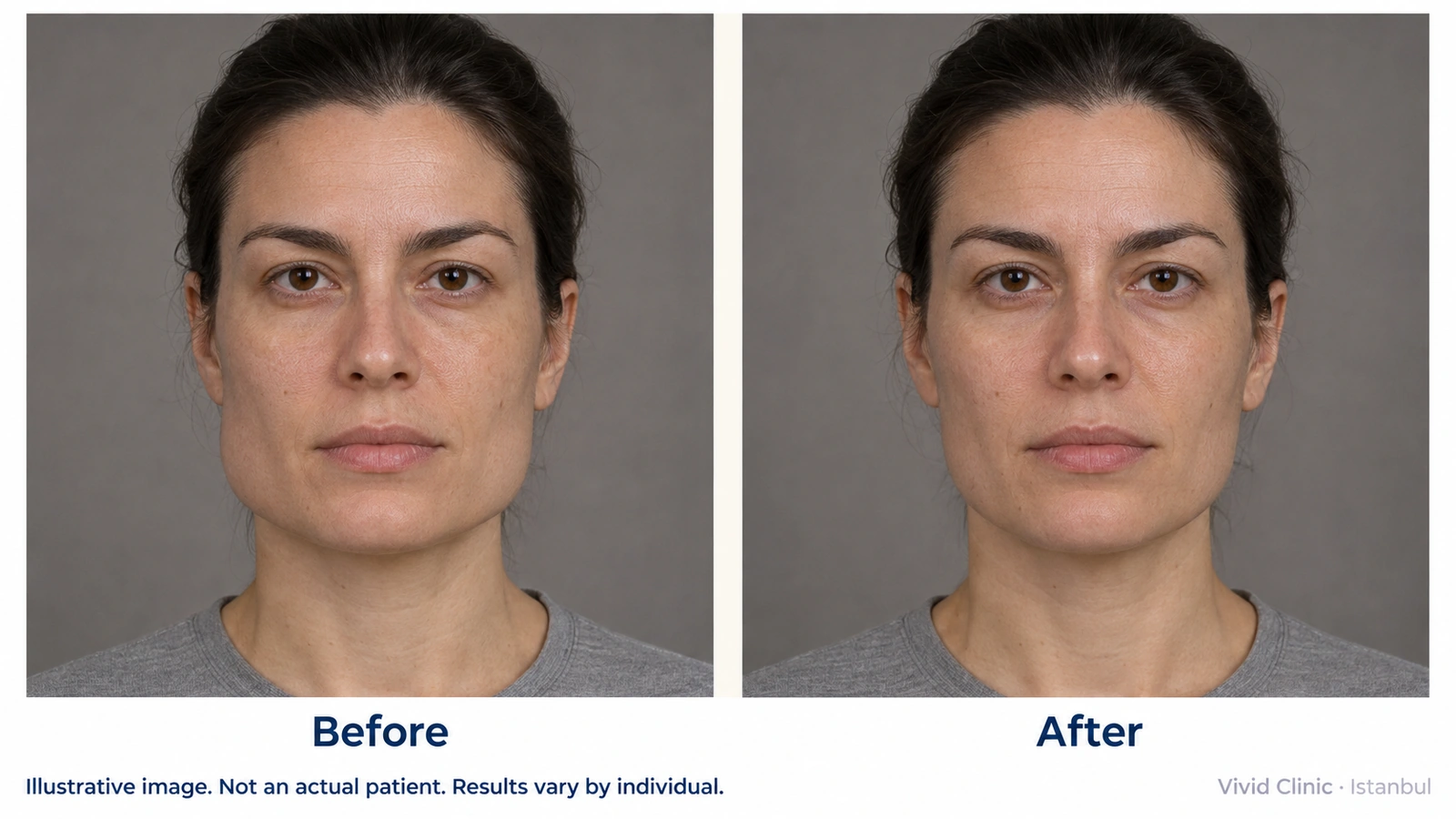
The photos below show real Vivid Clinic patients from the clinic’s own gallery, shared with consent as published on the clinic site. They are face and neck lift surgery cases, not masseter Botox or square jaw treatments, and results vary by anatomy, healing and treatment plan. Jaw Botox photos will be added when consented ones are available.
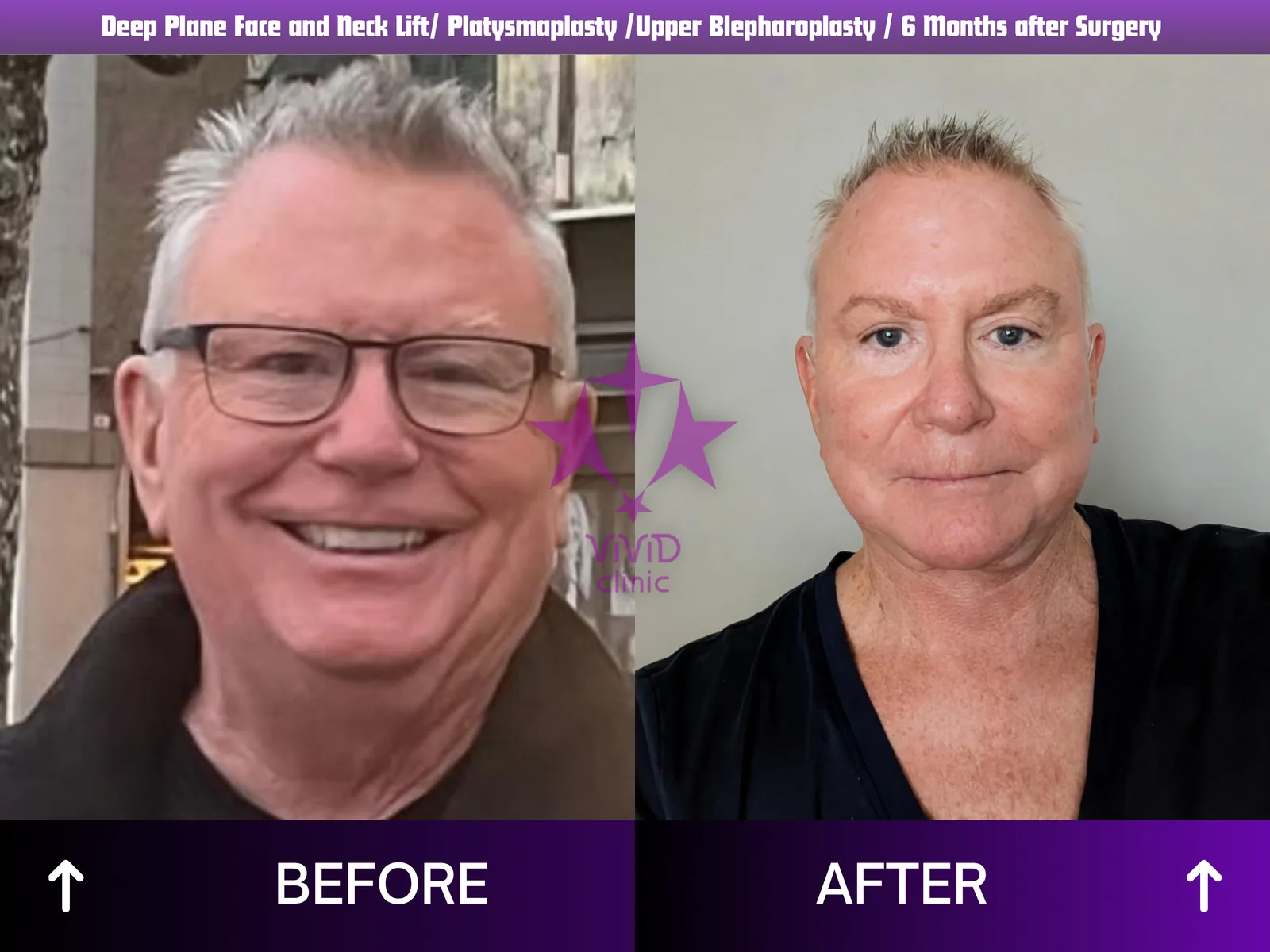

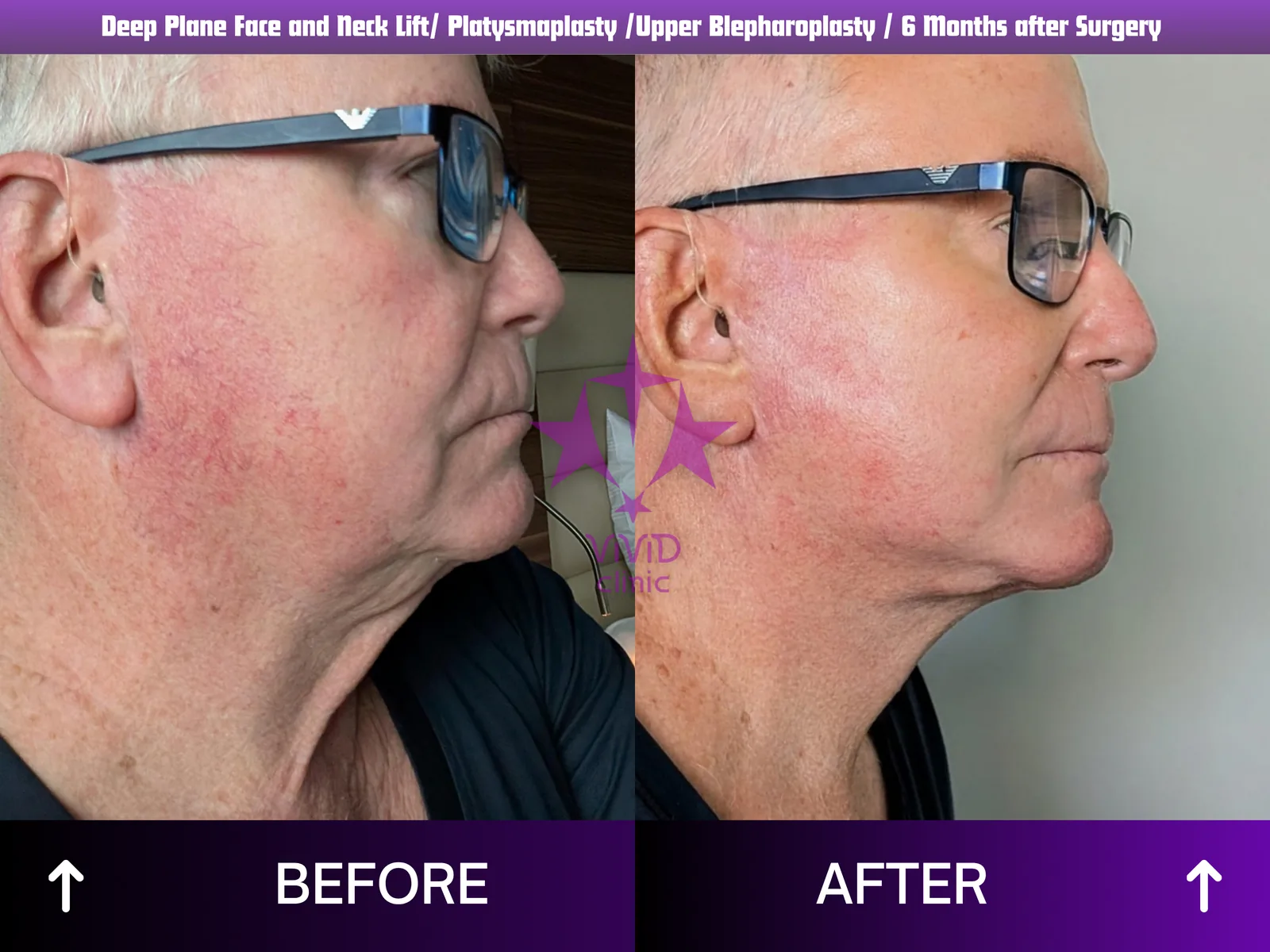
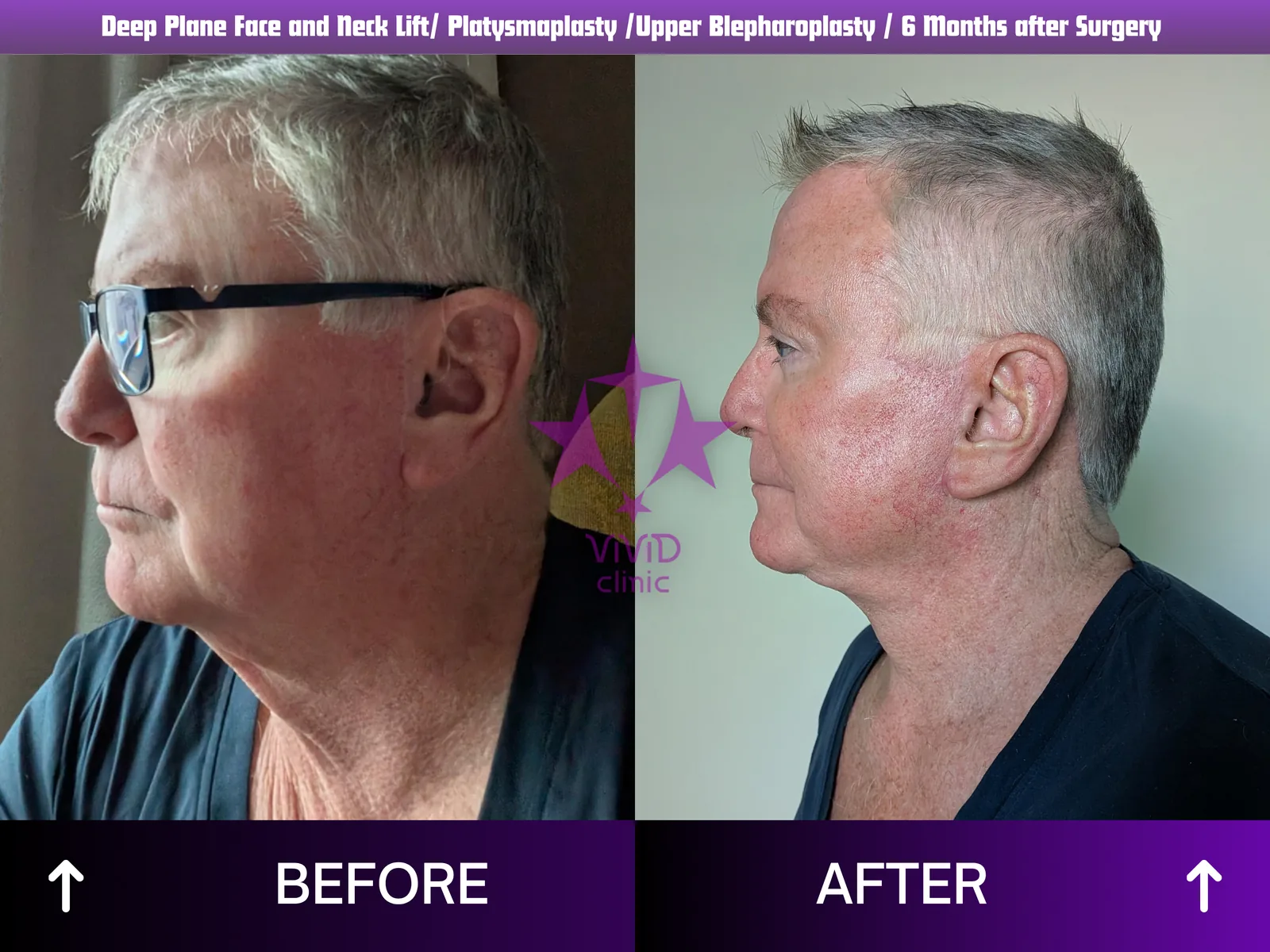
You can explore more cases in the full Vivid Clinic before and after gallery. To discuss your own goals, ask for a free quote and the team will arrange your consultation.
This article is for general information and does not replace a personal medical consultation. Suitability, risks, recovery and expected results should always be discussed with a qualified medical professional. Results vary by individual.