
 ChatGPT

When Your Nose Seems to Take Up the Whole Photo
You smile for a group photo, and later you zoom in on one thing only. Your nostrils seem to spread across your face, and the wide nose you have always noticed suddenly feels like all anyone could see.
That feeling is common, and it deserves a calm, honest answer. Every nose width is a normal variation, shaped by family, ancestry and time. Nothing about it needs fixing unless it truly bothers you.
If it does, the useful question is not “how wide” but “where”. This guide from Vivid Clinic in Istanbul, Turkey explains where nasal width sits, why that decides the treatment, what alarplasty can and cannot do, and when a different operation, or no operation, is the wiser path. If you would like a personal opinion, you can ask for a free consultation with a plastic surgeon before deciding anything.
What Is a Wide Nose?
Quick Answer: A wide nose is a nose that looks broad in relation to the rest of the face, at the nostrils, the tip, the bridge or a mix of these. It is a normal anatomical variation, not a medical problem. Whether it looks wide depends on proportion with your eyes, cheeks and lips, not on a single measurement.
If you are curious how your shape compares with others, our overview of different types of nose and shapes shows how varied normal really is.
Where the Width Sits: Nostrils, Tip or Bridge
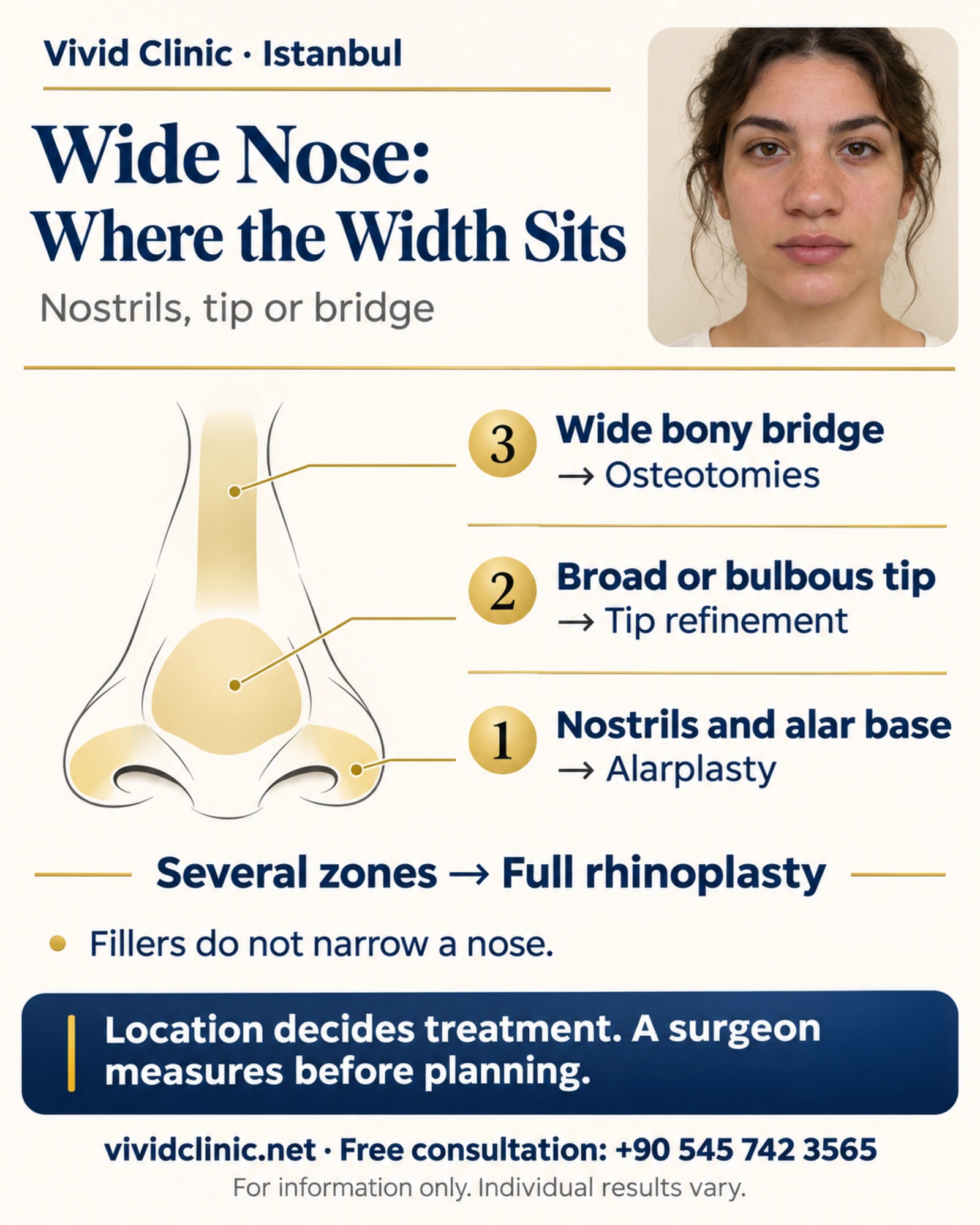
Width is not one thing. It can sit in three different zones, each made of different tissue, and each needs a different approach.
Wide Nostrils and a Wide Alar Base
The alar base is the lower part of the nose where the nostrils meet the cheeks and upper lip. Wide nostrils, or nostrils that flare strongly when you smile, are soft tissue features: skin, fibrous fat and muscle, with no bone involved.
This is the zone that alarplasty, also called alar base reduction, is designed to treat.
A Broad or Bulbous Tip
A tip can look wide when the tip cartilages are broad, rounded or set far apart, or when the skin over them is thick. This is often described as a bulbous nose. Narrowing the nostrils does not change the tip, because the cause sits in the cartilage.
A Wide Nose Bridge
A wide nose bridge involves the nasal bones and the upper cartilages. It may be something you were born with, or it may follow an injury. Soft tissue surgery at the nostrils has no effect here, because the width is in the bony framework.
Why the Location Decides the Treatment
Many people have width in more than one zone. Narrowing only the nostrils on a nose with a broad tip and bridge can leave the nose looking out of balance. A careful examination comes before any plan.
What Causes a Wide Nose?
Quick Answer: A wide nose is mostly inherited. Genetics and ancestry shape the bones, cartilages and skin thickness of the nose. Ageing can make the tip look broader over time, and an injury can spread the nasal bones. It is not caused by anything you did, and it cannot be changed by exercises or devices.
Genetics and Family Traits
Nose shape runs in families. The width of your nasal bones, the shape of your tip cartilages and the size of your nostrils are largely set by your genes.
Ancestry and Ethnic Background
Nasal shape varies across populations, and broader nostril bases, lower bridges and thicker skin are common, normal features in many people of African, Asian, Middle Eastern, Latin American and mixed heritage. These features are part of identity, not flaws. You can read more in our guide to ethnic nose shapes.
Ageing
With age, the skin of the nose can thicken, the tip can lose support and drop, and the nose may appear longer and somewhat broader than it did in your twenties.
Injury
A blow to the nose can push the nasal bones apart or shift them to one side. The bridge may look wider or flatter afterwards, sometimes with a change in breathing.
How to Make a Wide Nose Smaller: Honest Non-Surgical Options
Searches for how to make a wide nose smaller return a lot of confident advice. Most of it does not hold up.
Makeup Contouring
Contouring is the one non-surgical method that works, visually. A slightly darker matte shade along the sides of the nose and a lighter shade down the centre can make the nose look slimmer in photos and in person. It washes off and carries no medical risk. For many people it is enough.
Fillers Do Not Narrow a Nose
Filler adds volume. It can raise or straighten a bridge, which may make it look more defined from the front, but it cannot remove width or reduce nostril size. Nose filler also carries rare but serious risks, including skin injury and vision problems, so it should never be treated as a casual option.
Nose Shapers, Clips and Exercises
Clips, shapers, massage and facial exercises do not narrow a nose. Adult cartilage and bone do not remodel under gentle pressure, and there is no reliable evidence that these methods change nasal shape. Tight devices can also irritate the skin.
Surgical Options for a Wide Nose
Quick Answer: The right operation depends on where the width sits. Alarplasty narrows wide nostrils and the alar base. Tip refinement reshapes a broad tip. Osteotomies narrow a wide bony bridge. When more than one zone is involved, a full rhinoplasty usually gives a more balanced result than any single step.
Alarplasty (Alar Base Reduction)
Alarplasty removes a small, measured amount of tissue where the nostril meets the cheek or the nostril floor. It reduces nostril width, flare or both.
Tip Refinement
A broad tip is treated by reshaping and suturing the tip cartilages, sometimes with small grafts for support. Thick skin limits how much definition is achievable, and your surgeon should be clear about that. Our bulbous nose rhinoplasty before and after article shows the kind of change that may be possible.
Osteotomies for a Wide Bridge
To narrow a wide bony bridge, the surgeon makes controlled cuts in the nasal bones, called osteotomies, and moves them inward. This is part of a rhinoplasty, not a stand-alone minor procedure, and it involves a splint and more bruising.
When a Full Wide Nose Rhinoplasty Is Needed
If width involves the bridge, the tip and the nostrils together, or if breathing needs attention, a full rhinoplasty in Turkey is usually the more suitable plan. Wide nose rhinoplasty takes longer, is normally performed under general anaesthesia and has a much longer healing timeline than alarplasty alone.
Who Is a Good Candidate for Alarplasty?
Signs Alarplasty May Suit You
- Your main concern is wide nostrils or nostril flare, not the tip or bridge
- Your nose is otherwise in balance with your face
- You are an adult in good general health
- You do not smoke, or can stop well before and after surgery
- You want a modest, natural refinement and accept a fine scar in the crease
When Alarplasty Is Not the Right Choice
- The width is mainly in the tip or the bony bridge
- Your nostrils are already narrow in relation to your tip
- You have a history of raised or keloid scars, which needs careful discussion
- You expect a dramatic change, or a nose that no longer reflects your heritage
- You are pregnant, breastfeeding or have an uncontrolled medical condition
Your surgeon will evaluate your suitability in person or from clear photos.
How Alarplasty Works
Consultation and Measurement
The surgeon studies your nose at rest and while smiling, measures the alar base and checks symmetry. Most noses are slightly uneven to begin with, and you agree together on how much narrowing is sensible.
Anaesthesia
Alarplasty alone is often performed under local anaesthesia, with or without sedation. When it is part of a rhinoplasty, general anaesthesia is used.
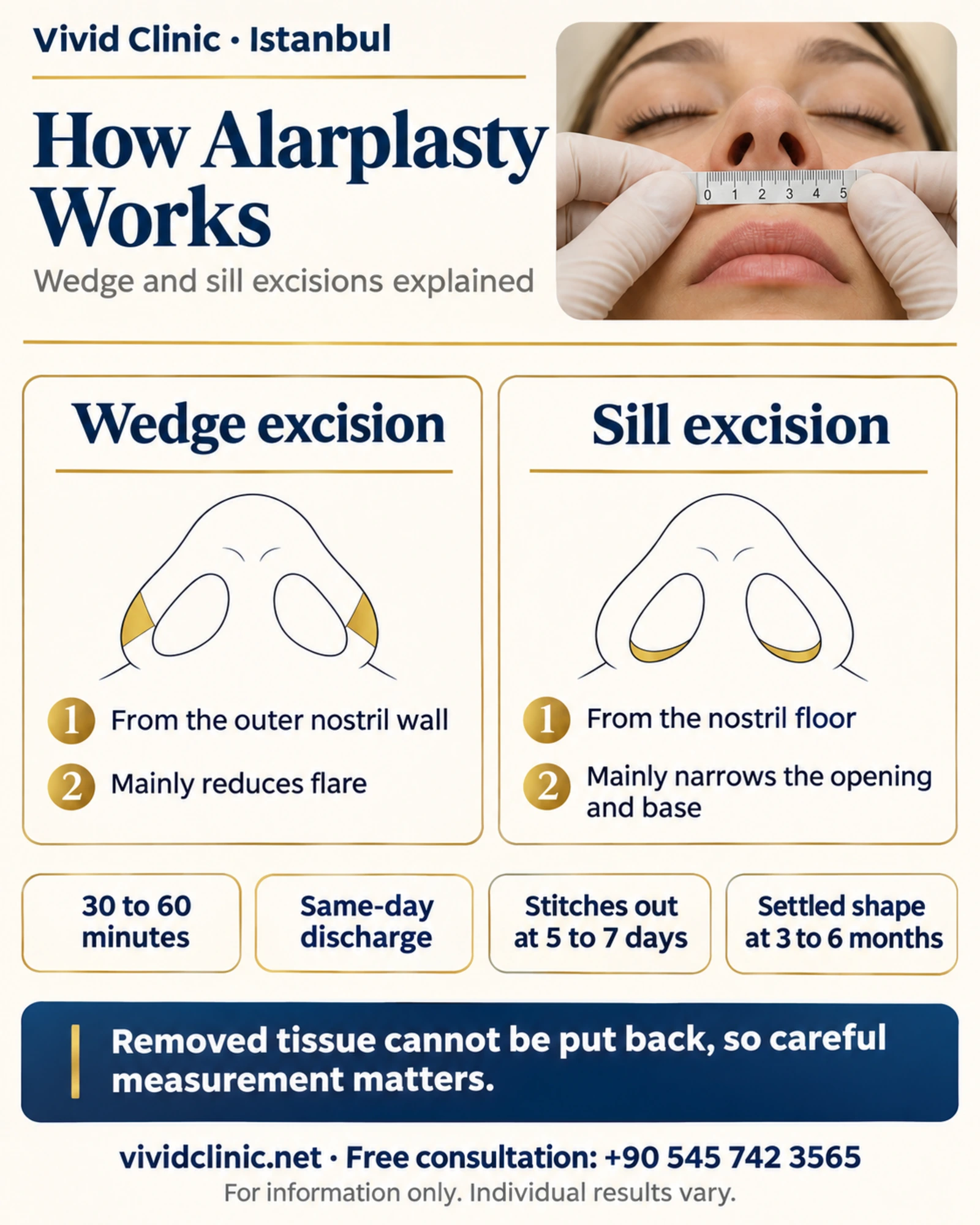
Wedge and Sill Excisions
In general terms, there are two patterns:
- Wedge excision: a small wedge of tissue is removed from the outer nostril wall where it meets the cheek. This mainly reduces flare.
- Sill excision: a small piece is removed from the nostril floor. This mainly reduces the width of the nostril opening and the base.
The two are often combined, and the amounts are measured in millimetres. Fine stitches close the skin.
Where the Incisions Sit
The incisions are placed in the natural crease where the nostril joins the cheek, and sometimes just inside the nostril floor. Scars usually fade well in this crease, but they do not disappear, and how visible they remain varies with skin type and healing.
Procedure Overview Table: Alarplasty (Alar Base Reduction)
| Aspect | Details |
|---|---|
| Duration Process | About 30 to 60 minutes when performed alone |
| Hospitalization Duration | Usually same day discharge |
| Mobility Duration | Walking the same day |
| Return to Activity | Desk work within a few days to a week; strenuous exercise after about 2 to 3 weeks |
| Complete Recovery | Stitches removed at around 5 to 7 days; most swelling settles in 4 to 6 weeks; scars mature over 6 to 12 months |
| Anticipated Results | Narrower nostril base visible once early swelling eases, with the settled shape at about 3 to 6 months |
Timings are general estimates for alarplasty alone. A full rhinoplasty has longer timelines: a splint for about a week, and swelling that can take a year or more to settle fully. Results vary by individual.
Alarplasty Recovery Timeline
First 24 to 48 Hours
Expect swelling, tightness and mild bruising around the nostrils. Keep your head raised when resting.
First Week
The stitches stay in place and the area needs gentle cleaning as instructed. Avoid wide smiling, nose blowing and pressure on the nostrils. Stitches are usually removed at around five to seven days.
Weeks Two to Six
The incision lines look pink and may feel firm. Most swelling settles during this period, and most people are comfortable in social settings again.
Months Three to Twelve
The scars soften and fade gradually, and the final nostril shape becomes clear. Recovery depends on your anatomy, procedure plan and healing response.
Benefits of Alarplasty
- Narrower nostrils and less flare when smiling
- Better balance between the nose and the rest of the face
- A short procedure, often under local anaesthesia
- Incisions placed in a natural crease
- Can be combined with rhinoplasty when other zones need attention
Benefits vary, and alarplasty does not change the tip, the bridge or breathing problems.
Possible Risks and Side Effects
Every surgical procedure carries risk. Temporary swelling, bruising, redness and numbness around the nostrils are common.
Less common risks include:
- Over-narrowing: removed tissue cannot simply be put back, and nostrils that are too small can look unnatural and may affect airflow
- Asymmetry: small differences between the two sides can remain or appear
- Visible, raised or notched scars
- Infection, bleeding or slow healing
- A need for revision surgery
This is why conservative planning matters. A careful surgeon removes less, not more, and respects the features that make your face yours. For patients who want refinement that keeps their heritage visible, ethnic rhinoplasty planning follows the same principle.
How to Prepare for Surgery
- Share your medical history, medications and supplements.
- Ask whether to pause blood-thinning medicines, and follow your doctor’s advice.
- Stop smoking and nicotine products as instructed.
Aftercare Tips for a Smoother Recovery
- Clean the incision lines exactly as shown.
- Sleep with your head raised for the first few nights.
- Avoid rubbing, picking or pressing on the nostrils.
- Contact the clinic quickly if you notice increasing pain, fever, spreading redness or discharge.
Cost Factors in Istanbul, Turkey
The cost of treating a wide nose depends on the plan, not on a fixed list. The main factors are:
- Alarplasty alone, or combined with tip work, osteotomies or full rhinoplasty
- Local or general anaesthesia
- Hospital setting and operating time
- Whether it is a first operation or a revision
- Medications, follow-up visits, accommodation and transfers
For an early idea, try the surgery price calculator, then confirm the details after your evaluation.
Why Choose Vivid Clinic?
At Vivid Clinic in Istanbul, Turkey, planning starts with finding where the width sits and whether surgery is worthwhile at all. If makeup, a smaller step or no treatment is the honest answer, you will hear it. You can read about rhinoplasty at Vivid Clinic, meet our doctors and begin with a free consultation with a plastic surgeon before you commit.
What International Patients Can Expect
For alarplasty alone, many people plan around five to seven days in Istanbul so that stitches can be checked or removed before the flight home. A full rhinoplasty usually needs a longer stay.
Operation Process Overview at Vivid Clinic
Your journey with Vivid Clinic begins when you arrive in Istanbul, where a VIP airport transfer takes you to your 5-star hotel for check-in and rest. Next comes your one-on-one consultation, where the surgeon measures your alar base, studies your tip and bridge, and explains whether alarplasty, rhinoplasty or no surgery suits you. On surgery day, every step is planned for comfort, safety and a natural look. Post-operative care starts straight away, with cleaning instructions and a direct contact line. A checkup visit before your departure confirms that healing is on track, and remote aftercare follow-up continues once you are home.
FAQs
Can alarplasty alone fix a wide nose?
It can, when the width sits at the nostrils. Alarplasty narrows the alar base and reduces flare, so it works well for a wide nose where the tip and bridge are already in balance with the face. It does not change a broad tip, which needs cartilage reshaping, or a wide bony bridge, which needs osteotomies as part of rhinoplasty. If more than one zone is involved, narrowing the nostrils alone can leave the nose looking out of proportion. Your surgeon will examine your nose and explain honestly which approach suits your anatomy.
How long should I stay in Istanbul for wide nose surgery?
It depends on the procedure. For alarplasty alone, many people plan around five to seven days in Istanbul, which allows time for the consultation, the procedure and a checkup where stitches are checked or removed. For a full wide nose rhinoplasty with tip work or osteotomies, a longer stay is usually advised, because a splint stays on for about a week and the surgeon needs to review you after it comes off. Your Vivid Clinic coordinator will suggest dates once your plan is clear. Healing varies, so keep some flexibility in your return flight.
Will a wide nose come back after alarplasty?
The tissue removed during alarplasty does not grow back, so the narrowing is generally long-lasting. A wide nose does not usually return to its earlier width. That said, your face continues to age, and the skin and tip can change slowly over the years. Early swelling can also make the nostrils look different from week to week, so the settled shape is judged at around three to six months. Because the change is difficult to reverse, surgeons plan conservatively. Removing a little less is safer than removing too much.
Can a wide nose be narrowed without surgery?
Not structurally. Makeup contouring can make a wide nose look slimmer in photos and in daily life, and for many people that is enough. Fillers add volume, so they cannot reduce width, and nose filler carries rare but serious risks. Nose shapers, clips, massage and exercises do not change adult cartilage or bone, and there is no reliable evidence that they work. If the width truly bothers you, the options that change structure are surgical: alarplasty for the nostrils, tip refinement for a broad tip and osteotomies for a wide bridge.
What affects the cost of wide nose surgery in Turkey?
The cost depends on your individual plan. Alarplasty alone is a shorter procedure, often under local anaesthesia, while wide nose rhinoplasty with tip refinement or osteotomies takes longer and uses general anaesthesia in a hospital setting. Other factors include whether it is a first operation or a revision, the surgeon’s experience, medications, follow-up visits and travel package elements such as hotel nights and VIP transfers. Vivid Clinic provides a personalised quote after reviewing your photos and goals. The online price calculator can give you an early idea first.
Conclusion
A wide nose is a normal variation, and many people decide that understanding it is all they needed. If the width does bother you, the first step is finding where it sits. Alarplasty can refine wide nostrils through small incisions in the natural crease, while a broad tip or a wide bridge calls for rhinoplasty techniques with a longer recovery.
Good results come from conservative planning that keeps your nose in harmony with your face and your identity. Vivid Clinic in Istanbul, Turkey offers a free consultation with a plastic surgeon to help you understand your options with no pressure. Request your free consultation and get a clear, personal view of what is realistic for you.
Real Before and After Results at Vivid Clinic
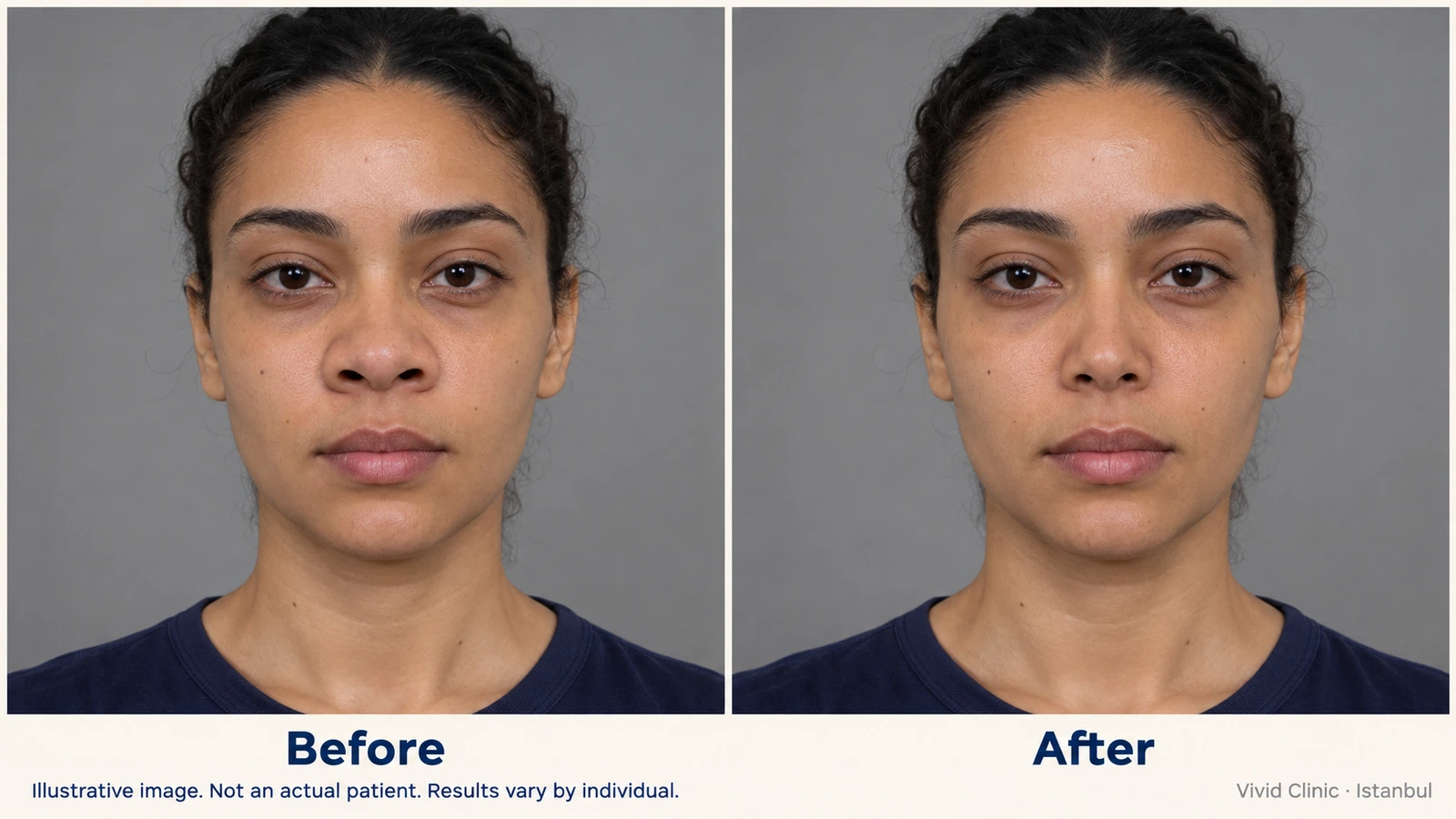
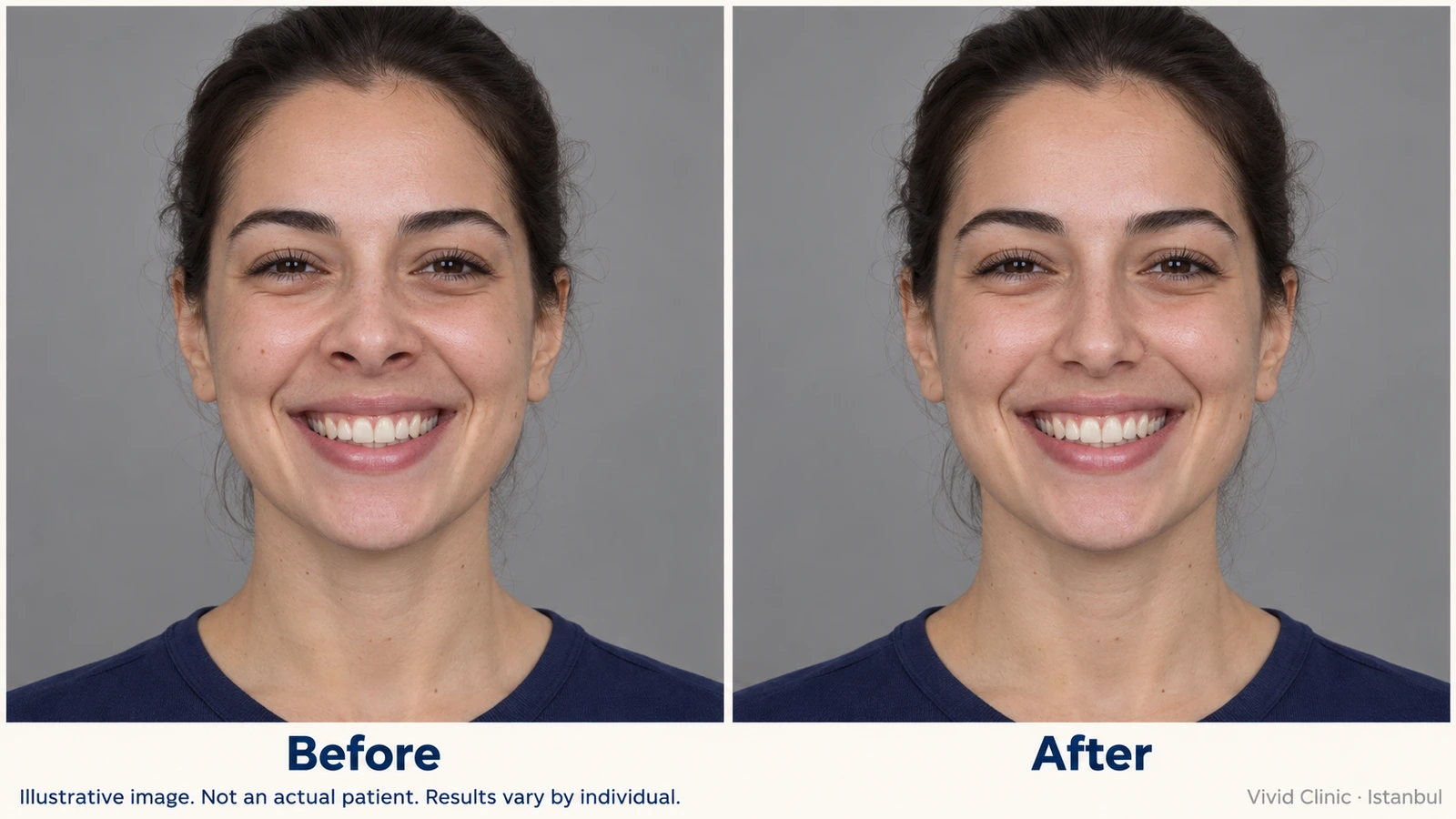
The photos below show real Vivid Clinic patients from the clinic’s own gallery, shared with consent as published on the clinic site. They are general rhinoplasty cases, a related procedure, not specifically alarplasty or wide nose cases, and results vary by anatomy, healing and treatment plan.
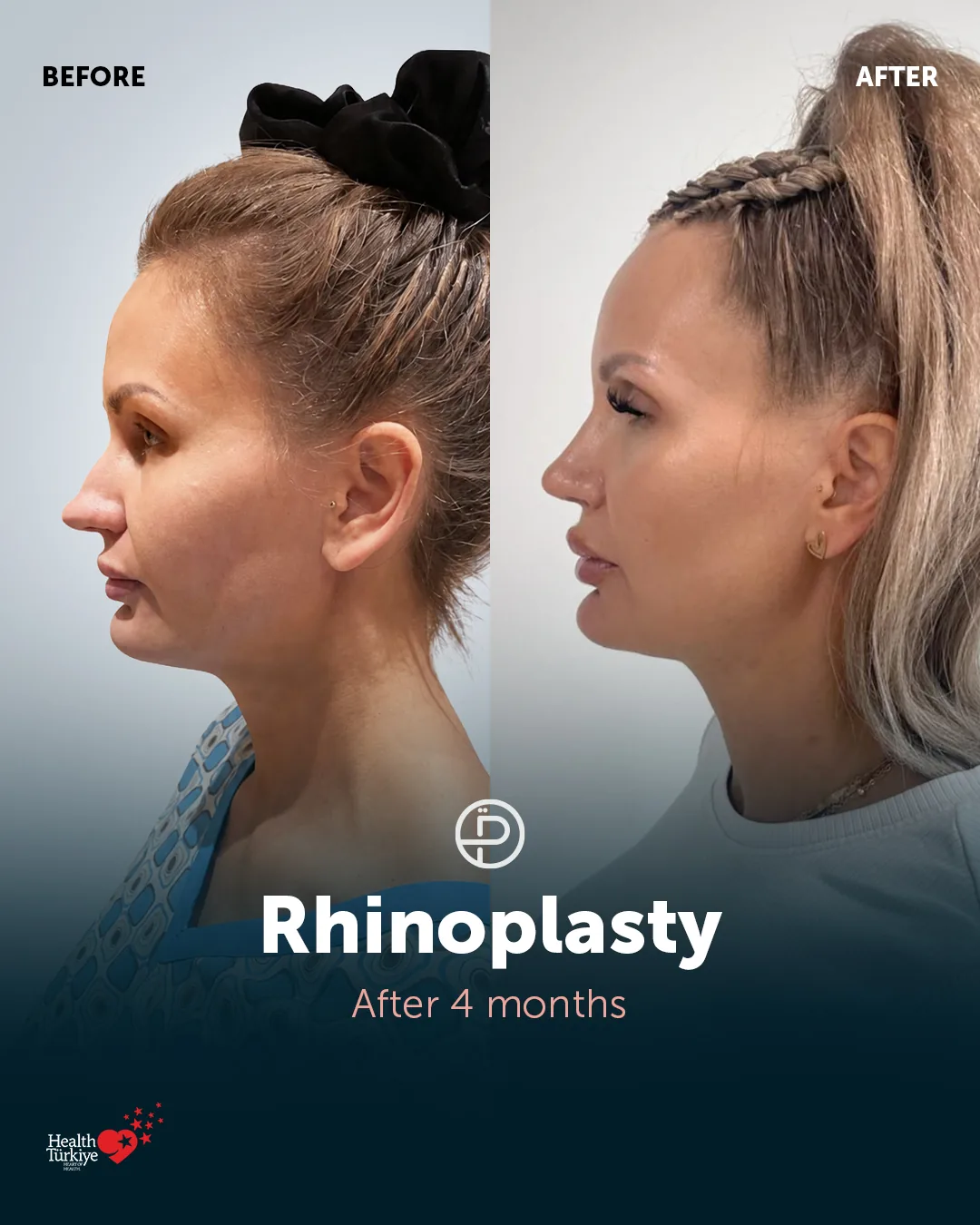
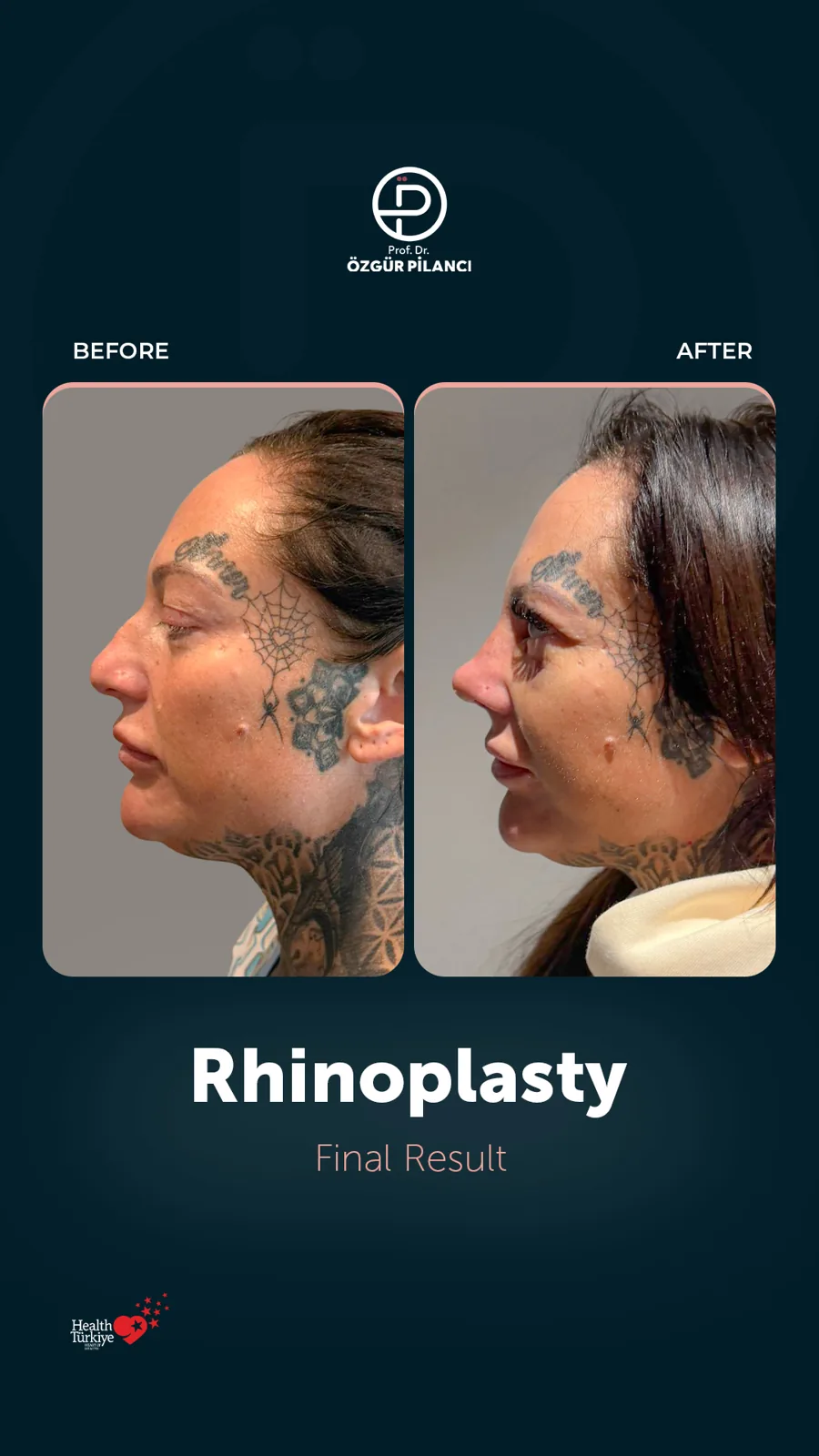

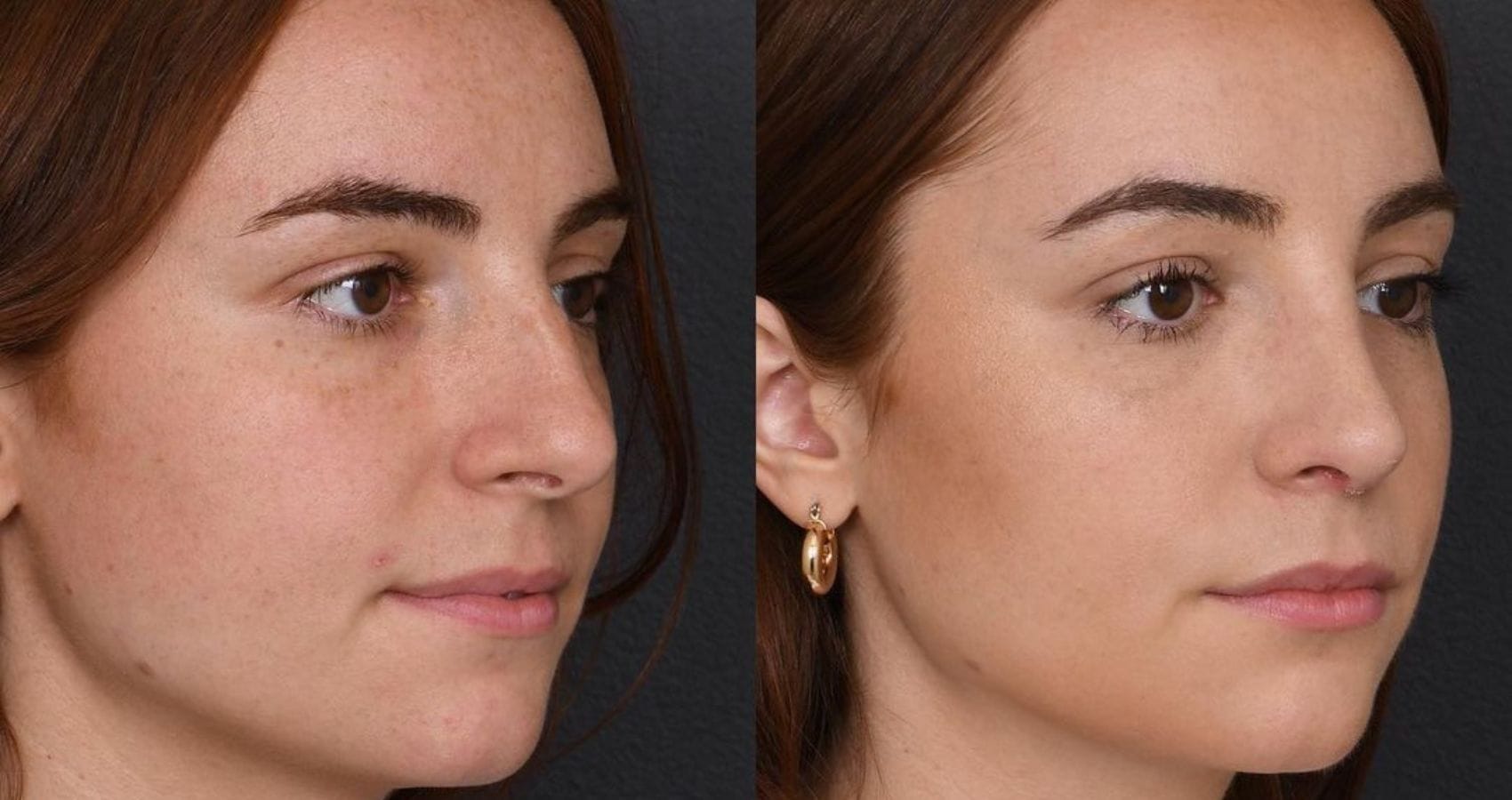
You can explore more cases in the full Vivid Clinic before and after gallery. To discuss your own nose, ask for a free quote and the team will arrange your consultation.
This article is for general information and does not replace a personal medical consultation. Suitability, risks, recovery and expected results should always be discussed with a qualified medical professional. Results vary by individual.