
 ChatGPT

Medically reviewed by Prof. Dr. Özgür Pilancı, Plastic, Reconstructive & Aesthetic Surgeon — August 2026
Quick answer (updated August 2026): Facial implants are solid, shaped pieces of biocompatible material placed against the facial skeleton to add projection where bone is deficient. The three common sites are the cheek (malar and submalar), the chin, and the jaw angle (mandibular). They are usually placed through incisions inside the mouth, so there is no external scar, and fixed to bone with screws or sutures. Published complication rates pool at roughly 4% to 11%, with infection at 2–5% and displacement at 1–3%. Implants add structure — they cannot correct a bite, remove fat, or tighten skin.
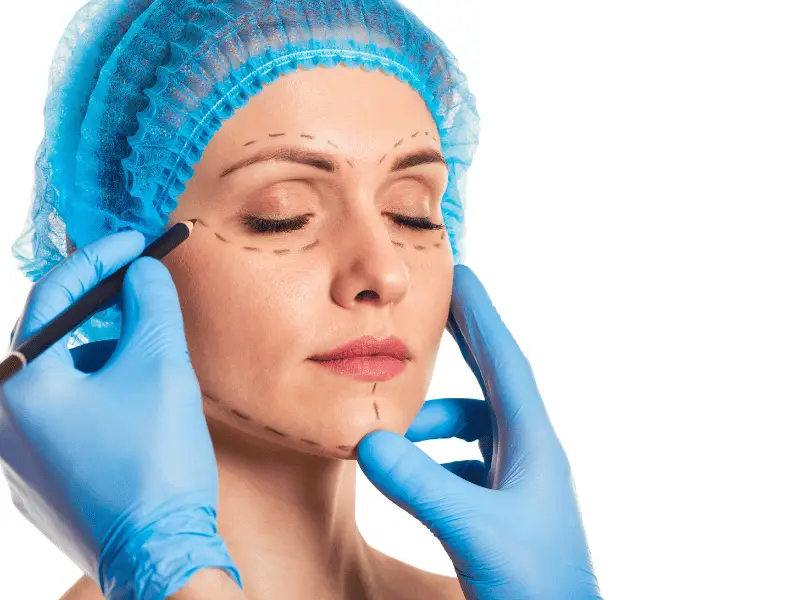
Facial implants add bone volume, and nothing else
Before comparing implants, it is worth being precise about what problem they solve, because roughly half the people searching for jawline surgery do not actually have a bone problem.
A jawline can look undefined for three quite different reasons. The bone may genuinely be small or set back. Fat may be sitting over it — under the chin, along the jaw, or in the cheek. Or the skin and soft tissue may have descended, blurring a jawline that is perfectly well built underneath.
Only the first of those is an implant problem. Fat under the chin is treated by removing fat. A descended jawline in a fifty-year-old is a lifting problem, not a volume one. Adding an implant to a face whose real issue is soft tissue produces a heavier, not sharper, result — which is why an honest assessment starts with palpating the bone rather than looking at a photograph.
The four implant zones
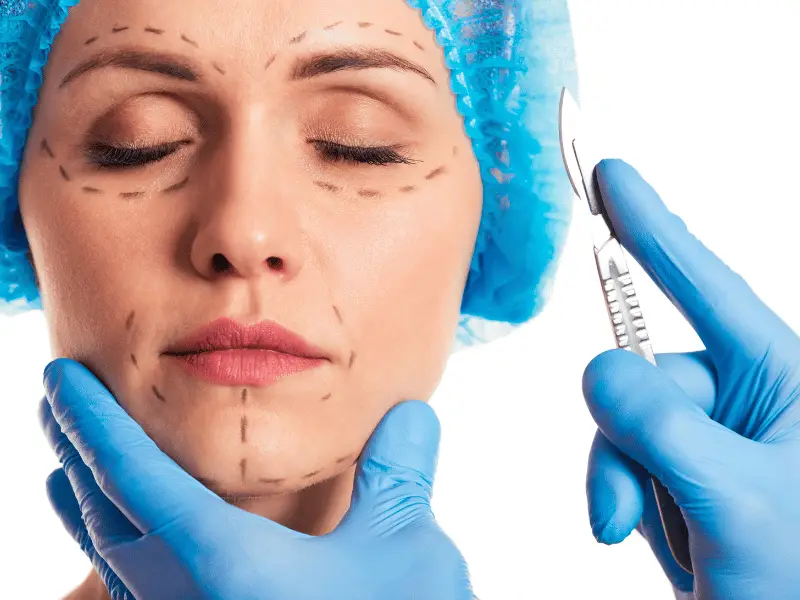
Malar (cheekbone) implants sit over the body of the zygomatic bone and increase the projection of the cheekbone itself — the high, lateral point of the midface.
Submalar implants sit lower, in the hollow beneath the cheekbone, and address flatness or gauntness rather than bony projection. The two are frequently confused. Malar implants project the bone; submalar implants fill the shadow below it. A combined implant does both. Cheek augmentation is the most frequently performed facial implant procedure, and choosing correctly between these three is most of what determines whether the result looks structured or simply wide.
Chin implants sit over the front of the chin, adding forward projection and, with extended designs, filling the prejowl sulcus — the small hollow just in front of the jowl that develops with age and makes a jawline look interrupted.
Mandibular angle implants sit at the back corner of the jaw, widening the lower face and sharpening the angle between the jawline and the neck. These are what most people actually mean by jaw implants or jawline enhancement.
What implants are made of

Four materials dominate, and the differences are practical rather than academic.
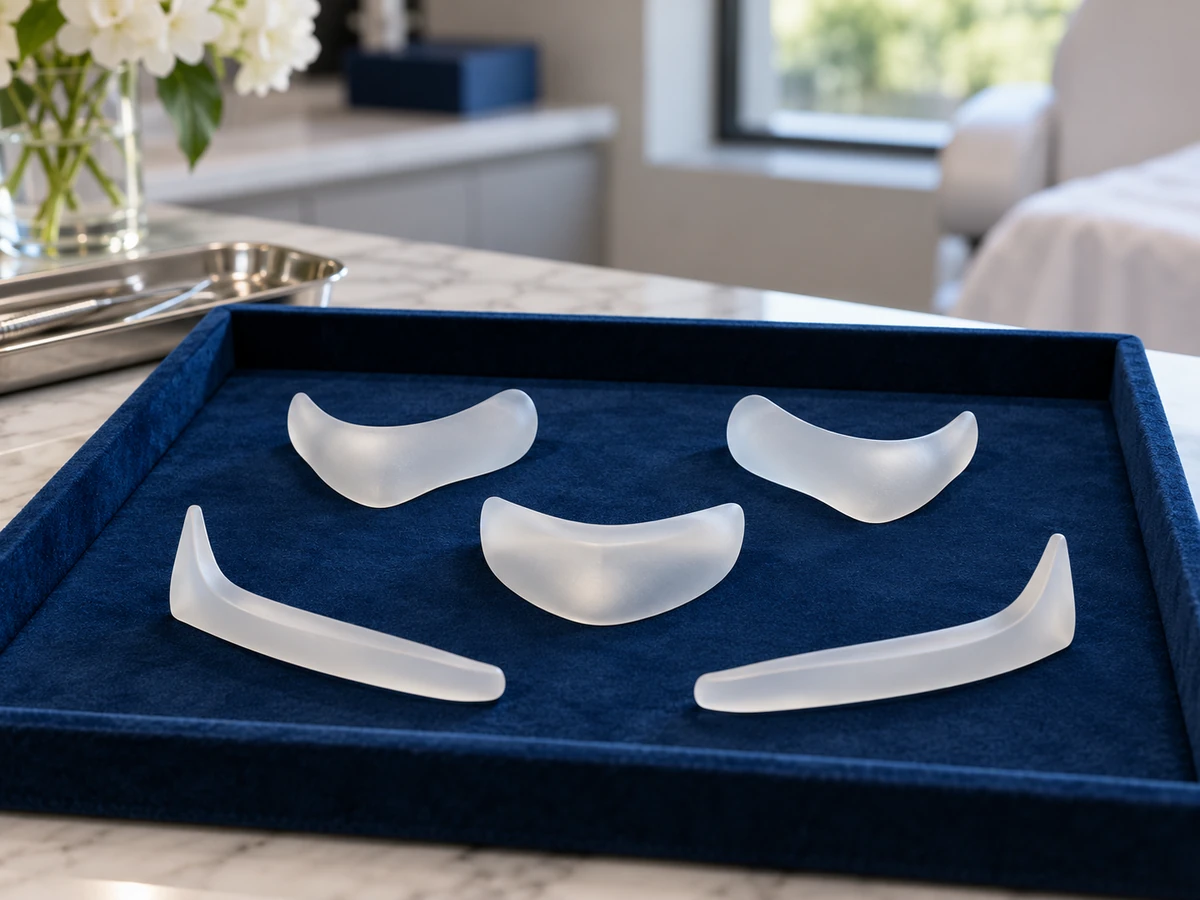
Solid silicone is smooth and non-porous. Tissue does not grow into it, which makes it straightforward to remove or exchange later — a genuine advantage — but also means it depends on a well-fitted pocket and fixation to stay put. Silicone implants are the ones most associated with bone resorption, where the bone beneath slowly remodels under the implant. This is usually modest and clinically unimportant, but it is real, and it is one reason many surgeons prefer porous materials for larger augmentations.
Porous high-density polyethylene (the best-known brand is Medpor) is rigid and full of pores between roughly 80 and 400 micrometres across. Pores in the 100–250 micrometre range allow bone and soft tissue to grow into the implant, which makes it very stable long-term. The trade-off is the mirror image of silicone’s: an integrated implant is considerably harder to remove.
Titanium is chemically inert and rigid, usually used as a fenestrated mesh that tissue grows through. It appears most often in mandibular augmentation and in reconstruction.
Patient-specific 3D-printed implants, made from titanium, PEEK or polyethylene composites, are designed from the patient’s own CT scan. They fit the individual skeleton rather than approximating it, and current evidence suggests they may reduce complications compared with off-the-shelf implants — particularly the asymmetry that comes from an imperfect pocket fit. They cost more and require imaging and planning time.
How the operation is done
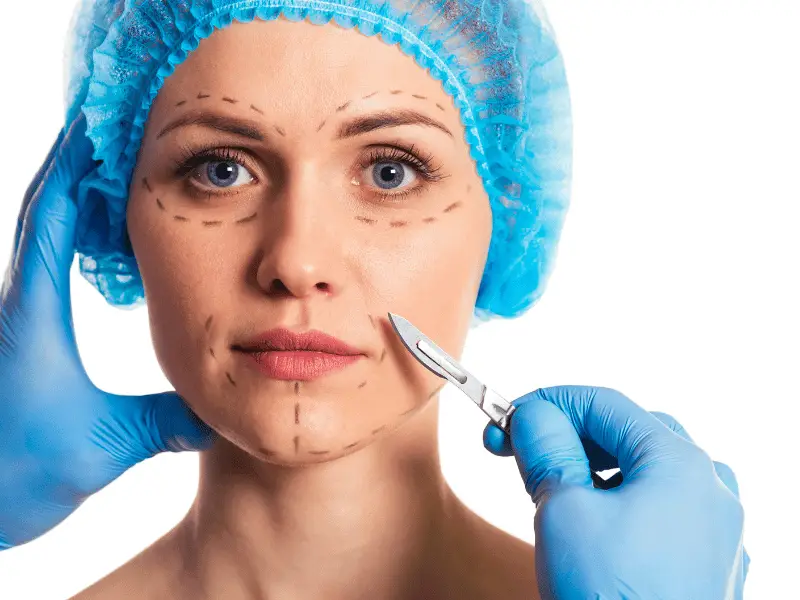
Anaesthesia is general, or intravenous sedation, depending on the site and whether other procedures are being performed at the same time.
Cheek implants are usually placed through an incision inside the mouth, above the gum line in the upper jaw, with the surgeon dissecting under the periosteum up toward the infraorbital rim. Some surgeons prefer an incision inside the lower eyelid or within the hairline, particularly when combining the implant with eyelid surgery or a lift.
Chin implants go in either through an incision inside the lower lip, in the crease where lip meets gum, or through a small incision under the chin. The mental nerve must be identified and protected, and the mentalis muscle has to be repaired properly on closure — failure to do so is a recognised cause of chin ptosis, the drooping “witch’s chin” appearance.
Jaw angle implants are placed through incisions inside the mouth toward the back of the jaw, with dissection under the periosteum up toward the sigmoid notch, and are generally fixed with titanium screws.
Implants are secured with sutures or screws, and the incisions are closed with absorbable stitches or with stitches removed within one to two weeks. Where the incision is intraoral, there is no external scar at all.
Risks, and how often they happen
Recent systematic reviews put pooled complication rates for facial implants at 4% to 11%. Broken down: For an independent overview of chin options, see Cleveland Clinic’s guide to chin augmentation.
- Infection: 2–5%. Infection around an implant usually means removal, because a foreign body with bacteria on it rarely settles with antibiotics alone. The implant can normally be replaced after the tissue has healed.
- Displacement: 1–3%. An implant that shifts produces visible asymmetry and needs repositioning.
- Nerve injury: around 2.4%, most often involving the mental nerve, which supplies sensation to the lower lip and chin. Numbness is common early on and usually temporary; permanent alteration is uncommon but possible.
- Bone resorption under the implant, more frequent with solid silicone than with porous polyethylene.
- Asymmetry is the single most common complaint overall, and it usually traces back to malposition or to an implant folding slightly in its pocket rather than to anything about the material.
Early problems tend to be hematoma and seroma; late problems are infection, mobility and, rarely, extrusion.

Implant, your own bone, or your own fat?
Three routes to a stronger facial contour, and they are not interchangeable.
An implant adds a fixed, predictable, permanent shape. It is a shorter and less invasive operation than bone surgery, with a recovery measured in weeks rather than months. It can only add — and it can only add in the direction the implant is shaped.
Moving your own bone — a sliding genioplasty at the chin, or orthognathic surgery for the jaws — repositions the skeleton itself. It can move a chin backward as well as forward, change vertical height, and correct genuine asymmetry, none of which an implant can do. It is a bigger operation with a longer recovery, and it carries no foreign body.
Fat grafting takes fat from elsewhere on your body and transfers it to the cheeks or along the jaw. It is soft rather than structural, and a proportion of the transferred fat is reabsorbed, so results are less predictable and top-up sessions are common. For softening a hollow it is excellent. For building a sharp jaw angle it is the wrong tool.
Dermal filler is the temporary version of the same idea — useful for a mild deficiency, or as a way to preview the direction of a change before committing to surgery, but it adds volume rather than structure and it wears off.
When the jawline problem is not bone

Two situations regularly reach implant consultations and should leave with a different plan.
Fullness rather than flatness. If the jawline is blurred by fat under the chin or a heavy lower cheek, adding an implant makes the lower face larger without making it sharper. That complaint is addressed by removing or repositioning the fat — our bichectomy page covers buccal fat reduction, which is the opposite intervention to a cheek implant and is sometimes what the patient in front of you actually needs. Laxity below the jawline is neck territory, covered on our neck lift page.
A bite problem. People searching jaw surgery overbite usually have a skeletal discrepancy between the upper and lower jaws. No implant can correct a bite. An implant placed over a receded lower jaw camouflages the profile while leaving the underlying relationship exactly as it was, and if the discrepancy is significant the honest answer is an orthognathic assessment with an oral and maxillofacial surgeon and an orthodontist, not a cosmetic implant.
How to fix an uneven jaw — and what “even” means
Mild facial asymmetry is close to universal; almost nobody’s left and right sides match. Before treating it, it is worth establishing which layer the asymmetry lives in — bone, muscle bulk (an enlarged masseter on one side is a common cause), fat distribution, or soft-tissue descent. A patient-specific implant designed from a CT scan is the most precise option when the asymmetry is genuinely skeletal, but where the cause is muscular or soft-tissue, an implant will not correct it and may draw attention to it.
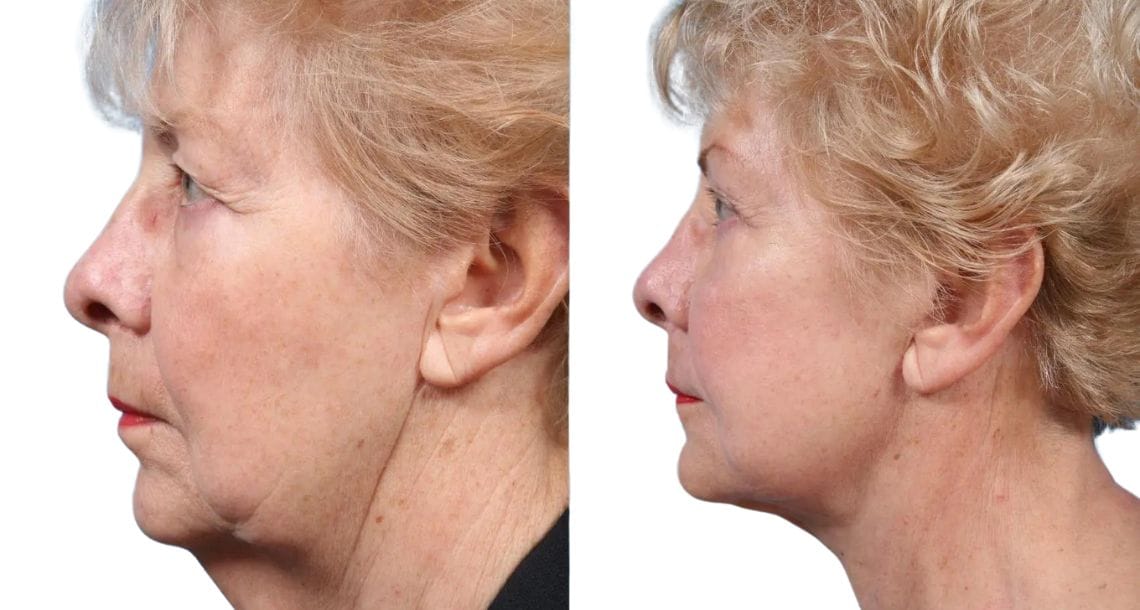
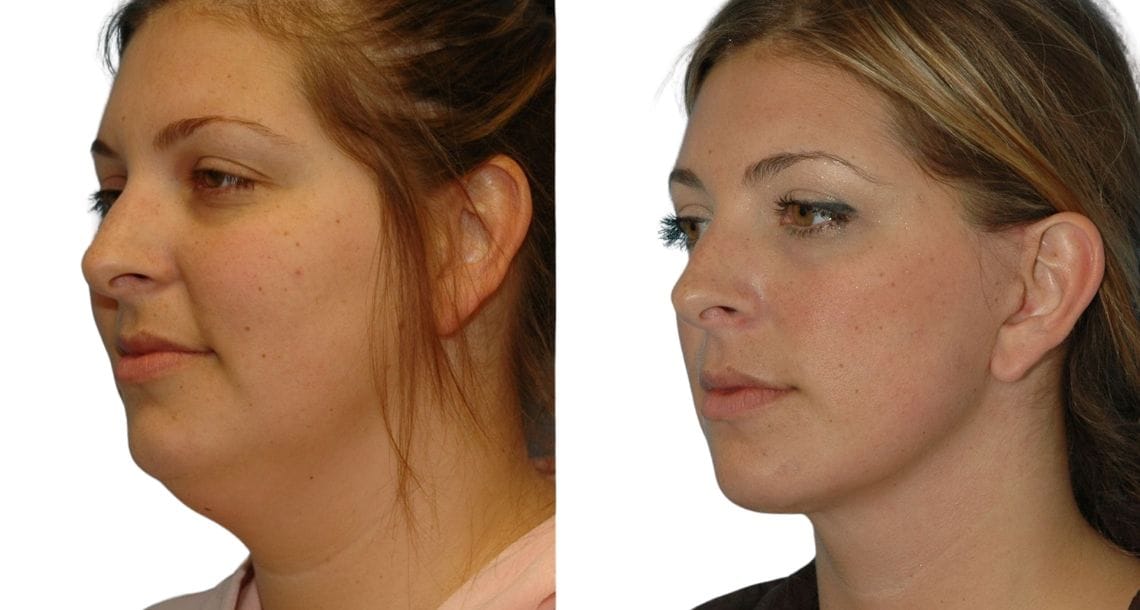
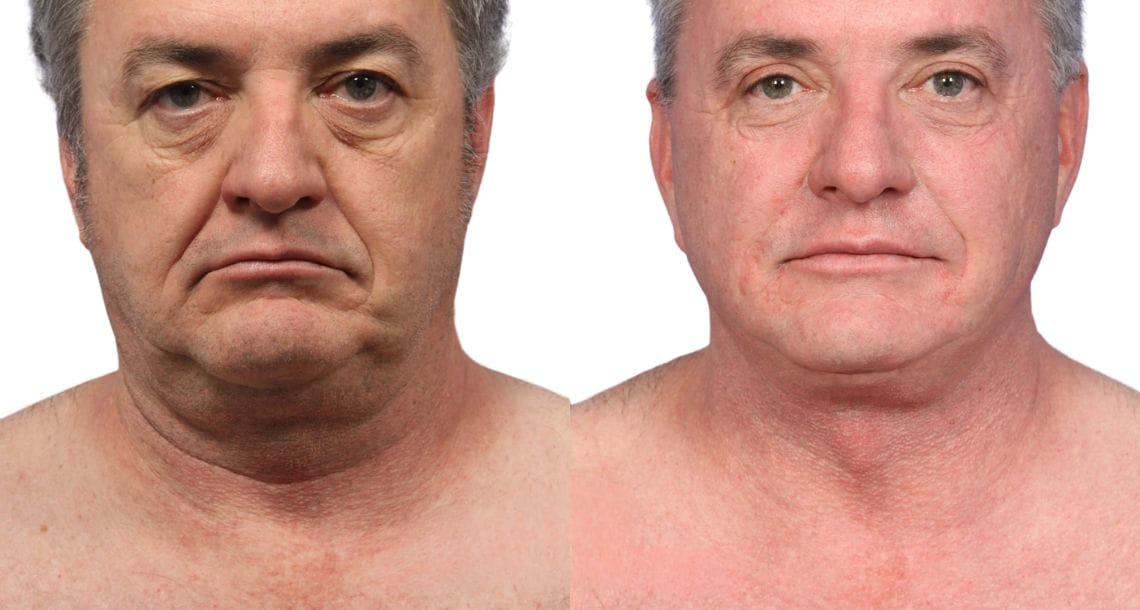
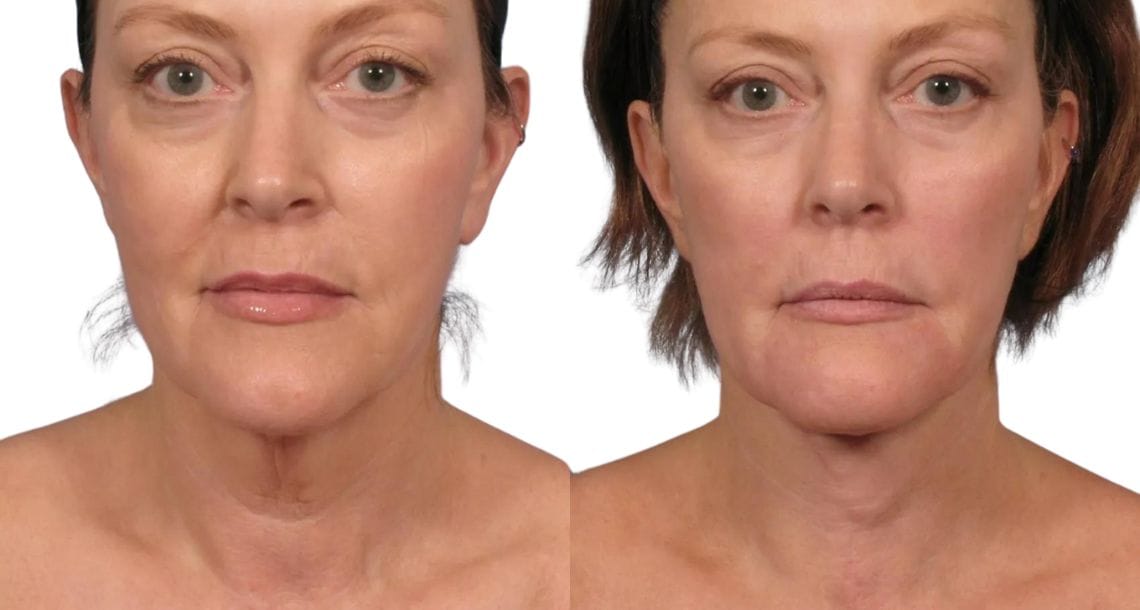
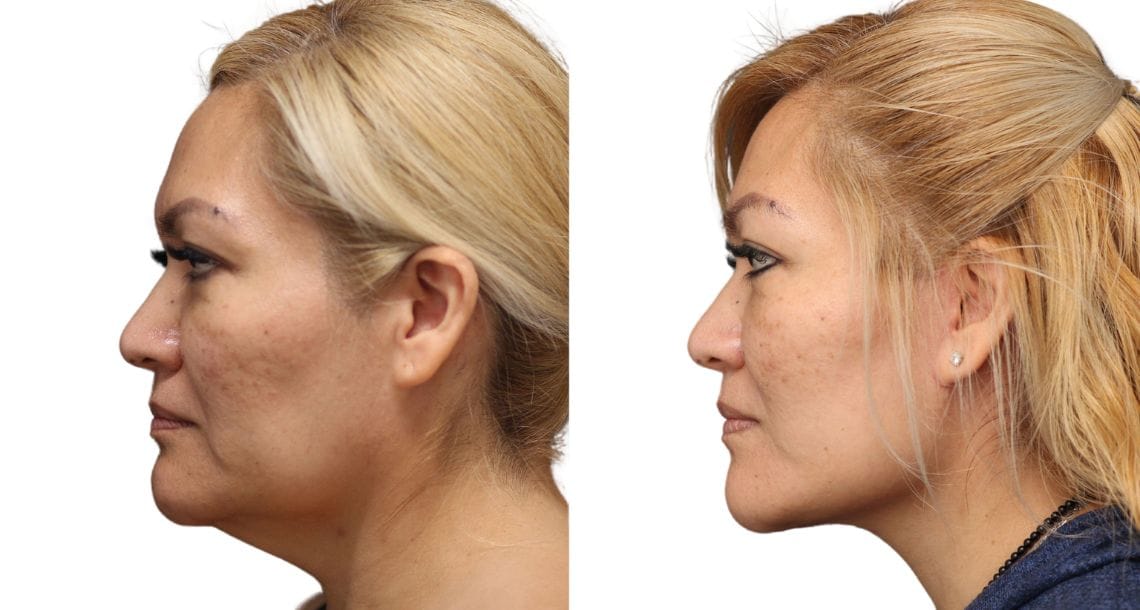
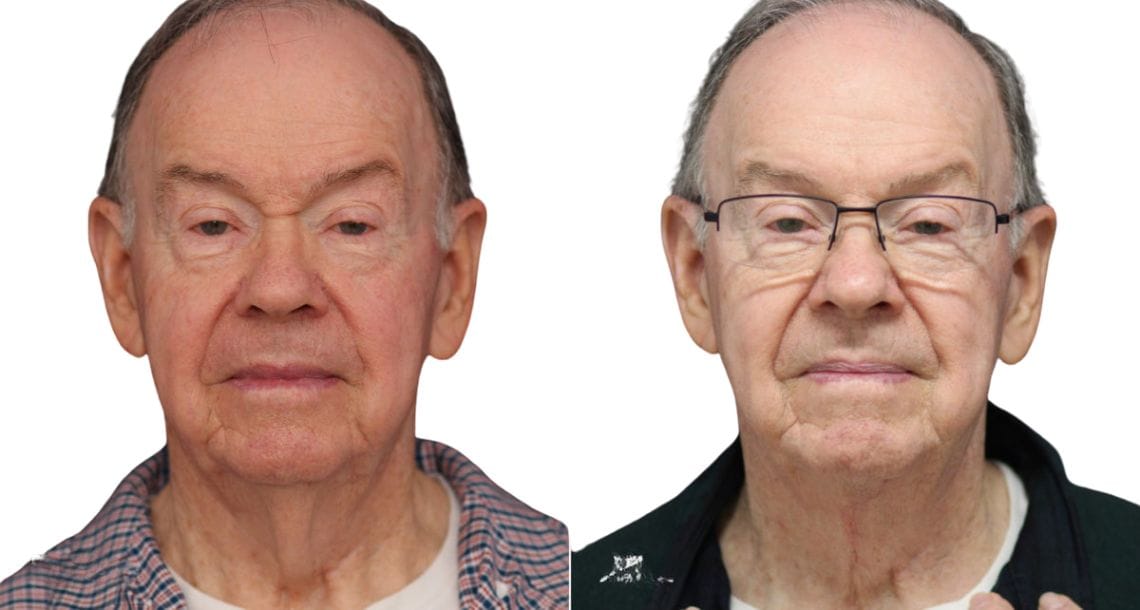
You can see how facial balancing decisions read on real faces in our before-and-after gallery.
Neck Lift Before & After Results at Vivid Clinic
Frequently Asked Questions
What is the difference between cheek implants and jaw implants?
Cheek implants sit over the zygomatic bone or in the hollow beneath it, increasing projection of the midface — malar implants project the cheekbone itself, submalar implants fill the flatness below it. Jaw or mandibular angle implants sit at the back corner of the lower jaw, widening the lower face and sharpening the angle between jawline and neck. They address different thirds of the face and are frequently combined with a chin implant, since a chin and jaw angle read together as one contour.
Are facial implants permanent?
They are designed to be permanent, and most are never removed. Solid silicone implants can be exchanged or taken out relatively straightforwardly because tissue does not grow into them. Porous polyethylene and titanium implants become integrated with surrounding tissue, which makes them very stable but considerably harder to remove later. If an implant becomes infected — a 2–5% risk — removal is usually necessary, though it can generally be replaced once healing is complete.
Do facial implants leave a scar?
Usually not a visible one. Cheek, chin and jaw angle implants are most often placed through incisions inside the mouth, which leave no external scar. Some surgeons place chin implants through a small incision under the chin instead; that does leave a scar, but it sits in a shadowed area beneath the jawline and typically fades well. Cheek implants placed alongside eyelid surgery may go in through an incision inside the lower eyelid. Ask which approach is planned.
Can a jaw implant fix an overbite?
No. An overbite is a relationship between the upper and lower jaws and their teeth, and correcting it requires orthognathic surgery, usually combined with orthodontic treatment. An implant sits on the outside of the bone and changes the profile without changing the bite at all. It can be a reasonable choice for someone whose bite is functionally fine but whose jaw simply looks weak; it is the wrong answer for a true skeletal discrepancy, and any surgeon who offers it as one should prompt a second opinion.
How risky are facial implants?
Pooled complication rates in recent systematic reviews run from about 4% to 11%. The specific figures are roughly 2–5% for infection, 1–3% for displacement and around 2.4% for nerve injury, most commonly temporary numbness of the lower lip from mental nerve irritation. Bone resorption beneath the implant can occur, more often with solid silicone than with porous materials. The most common source of dissatisfaction is asymmetry, usually from an imperfectly fitted pocket rather than from the implant material itself.
Is fat transfer a good alternative to cheek implants?
For softening hollowness in the cheek, fat transfer is a genuinely good option — it uses your own tissue, feels natural and adds nothing foreign. For building sharp, defined bony projection, it is not equivalent: fat is soft, it drapes rather than projects, and a proportion of it is reabsorbed over the first months, so the outcome is less predictable and a second session is common. In broad terms, implants build structure and fat restores fullness. Some patients are best served by both.
How long is recovery after facial implant surgery?
Most patients return to normal activities within roughly one to two weeks, with swelling and bruising settling over the following weeks and the final contour apparent at around three months. A soft diet is usual at first when the incision is inside the mouth, along with antiseptic mouth rinses. Numbness in the lip or chin after a chin or jaw implant is common early on and usually resolves. That is markedly shorter than the recovery from repositioning the bone itself, which is one of the main reasons implants are chosen.
Not sure whether your concern is bone, fat or soft tissue? Send photographs for a free online assessment and get a straight answer about what is actually driving the appearance — including when the honest answer is that an implant is not the right tool.