 ChatGPT

Medically reviewed by Prof. Dr. Özgür Pilancı, Plastic, Reconstructive & Aesthetic Surgeon — August 2026
Quick answer (updated August 2026): The nasolabial fold is not a wrinkle. It is a normal anatomical boundary between cheek and upper lip, present at every age, that deepens as midface volume is lost and the cheek fat pad descends. Marionette lines are a separate problem, driven by lost jawline support and the pull of the depressor anguli oris muscle. Nasolabial folds treatment escalates with severity, and only surgery reverses descent. No treatment removes a nasolabial fold entirely — and none should, because a face without one looks wrong.

Why the nasolabial fold is a boundary, not a crease
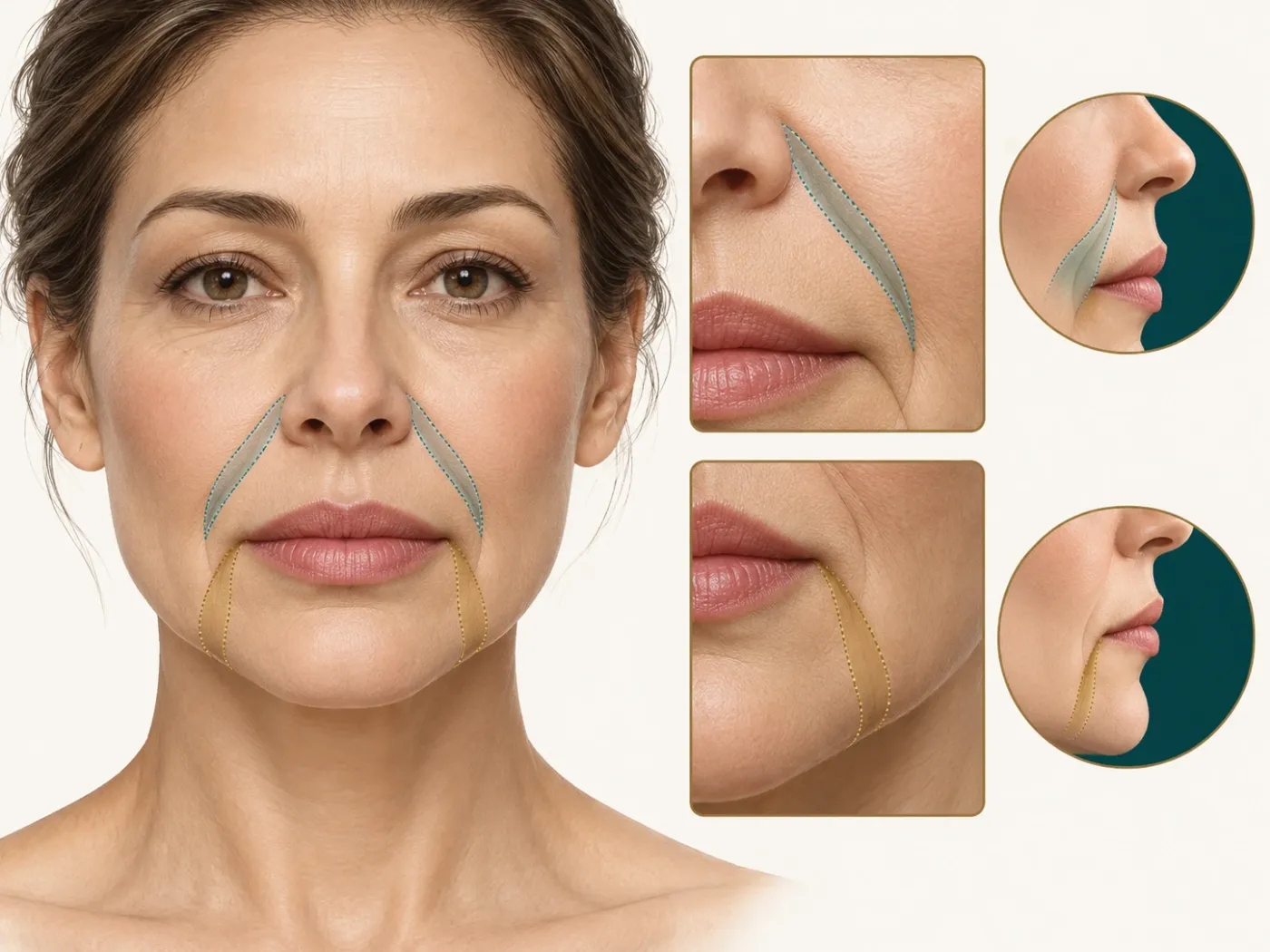
Look at a baby: the fold is already there. It marks a real anatomical border — where the mobile soft tissue of the cheek meets the fixed tissue of the upper lip, along an underlying fascial attachment. It shows clearly because the upper lip muscles attach almost directly to the skin there, with little fat in between.
Three changes deepen it with age. Midface volume is lost, so the cheek no longer stands proud above the line. The malar fat pad descends, piling against the fold from above — which is why folds usually deepen at the top first. And the skin changes: the Mayo Clinic notes that aging skin “becomes less elastic and drier, with less fat and collagen in the deeper layers” — accelerated by sun and smoking.
Marionette lines are a different problem
Marionette lines run from the mouth corners down toward the jaw. They are not a continuation of the nasolabial fold, and treating them as if they were is the commonest mistake patients make.

Three things drive them. Lost jawline support, as the jowl forms and the tissue in front of it hollows into the prejowl sulcus, so the mouth corner loses the shelf it sat on. Volume loss in the bone and soft tissue of the chin. And the depressor anguli oris, a small muscle running from jaw to mouth corner whose only job is to pull that corner down — with age its resting tone increasingly wins, which is why a face at rest can read as sad when its owner feels nothing of the sort. Only that third factor responds to a muscle relaxant.
The nasolabial folds treatment ladder
Each rung does something specific, and they are not interchangeable. Treating a structural problem with a surface treatment is the most reliable way to waste money.
Skincare and sun protection
Real, but modest — and aimed at a different target. Skincare improves skin quality: texture, tone, fine lines, pigmentation. It lifts nothing and fills nothing. The topical with the strongest evidence base is tretinoin, approved as an adjunctive treatment for photoaging and shown to improve fine wrinkles, roughness and mottled pigmentation. Daily broad-spectrum sunscreen is the other measure with real preventive value. Neither changes a deep fold.
Botulinum toxin: one narrow, useful role
Botulinum toxin relaxes muscles, so it works on lines made by movement. It does very little for the nasolabial fold itself, because that fold is a structural boundary, not a muscle crease — and relaxing the lip elevators enough to soften it would visibly disturb your smile.
It has one defined role here: the depressor anguli oris. Relaxing it releases the downward pull on the mouth corner. A systematic review of mouth-corner lifting reported that in one study of 36 patients, toxin to this muscle produced a significant lift of the commissure angle, lasting six to nine months.
Dermal filler: the mainstay, with a crucial nuance
Here is the nuance that separates a good result from an obvious one. Filling the fold directly is often the wrong move. If the fold is deep because the cheek above it has deflated and slipped, packing product into the crease treats the shadow rather than the cause — and an overfilled fold reads instantly as work, because it flattens a boundary meant to exist. Restoring volume higher up, over the cheekbone, frequently improves the fold more naturally by rebuilding the support it sat against. StatPearls describes exactly this: replenish and reposition volume in the malar fat pad above the muscle attachments.
For marionette lines, rebuilding jawline and prejowl support usually achieves more than filling the line: one review found that across three studies of 484 patients, fillers produced good satisfaction but no significant measured lift of the mouth corners.
One safety point is not optional. The nasolabial region is among the higher-risk areas of the face for vascular occlusion, because the angular artery runs close to the fold and its course varies between individuals. Filler forced into that vessel can cut off blood supply to the skin or, rarely, reach the eye’s circulation and cause vision loss. Published guidance on filler-related visual loss attributes 13.3% of reported cases to nasolabial fold injection, and states that “there is no absolute safe area of the face to inject.”
This is rare, and it is a genuine emergency: sight-threatening cases need treatment within roughly 60 to 90 minutes. Hyaluronic acid filler can be dissolved with hyaluronidase, but only by someone who keeps it on the premises and knows how to use it under pressure. Ask any injector: do you stock hyaluronidase, and what is your protocol? Hesitation is your answer. Both the American Academy of Dermatology and the American Society of Plastic Surgeons are clear that these injections belong with trained medical practitioners.
Energy-based skin tightening
Radiofrequency and microfocused ultrasound heat the deeper skin to stimulate collagen. One study on the mid and lower face reported improvement in 93% of patients on blinded assessment at six months, maintained at a year — framed by the authors as appropriate for mild-to-moderate laxity. That qualifier is the whole story: these devices improve skin quality but cannot reposition a descended fat pad.
Fat grafting
Fat grafting replaces lost volume with your own tissue; the midface, nasolabial folds and marionette lines are all recognized targets. Its advantage is that surviving fat is permanent; its drawback is unpredictability. StatPearls reports that while roughly 80% of patients keep about 80% of the fat injected, the remaining 20% resorb all or nearly all of it. In that mouth-corner review, fat used to lift the commissure showed early results that had completely disappeared by twelve months. Fat is a volume tool, not a lifting tool.
Surgery
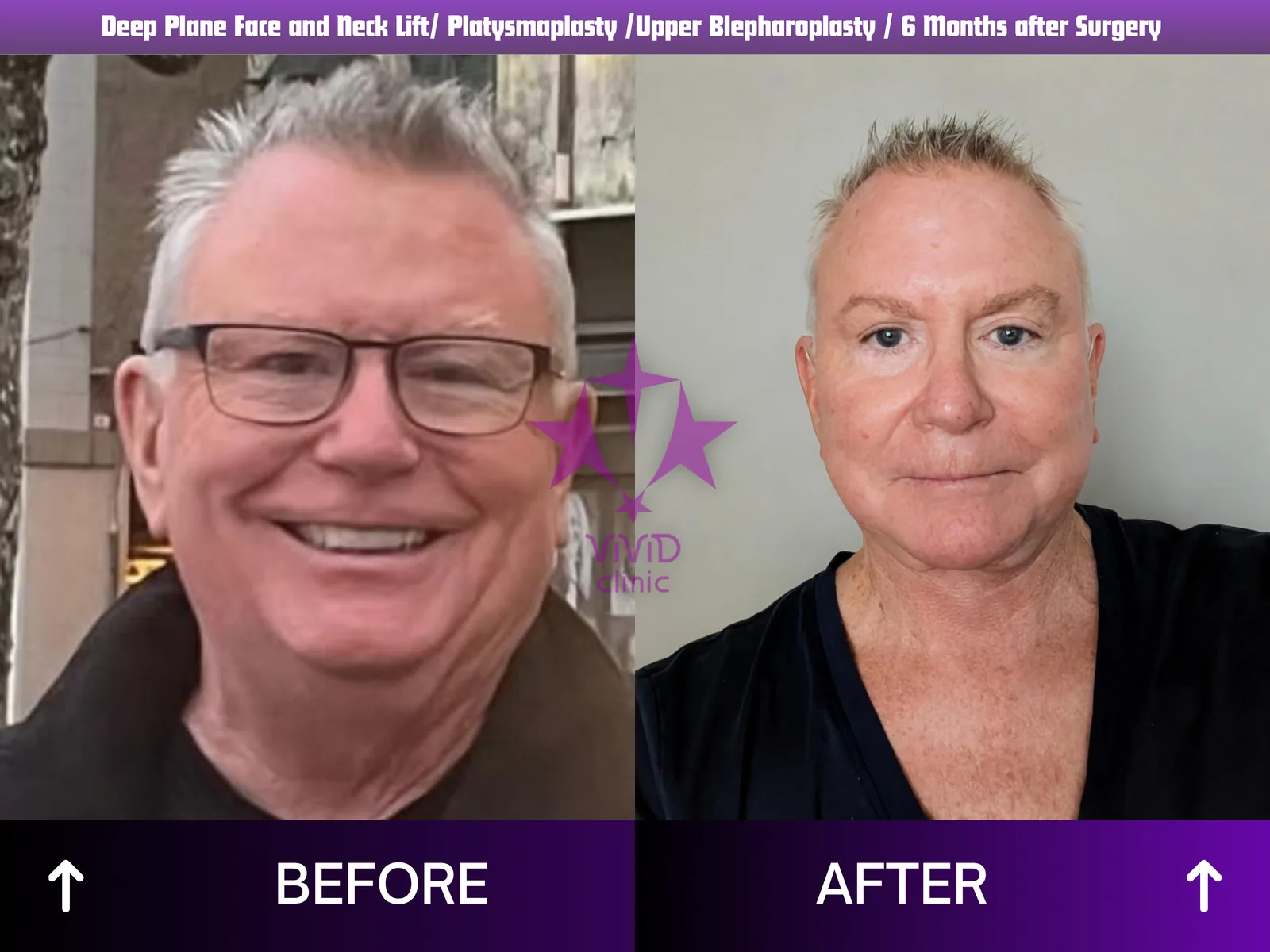
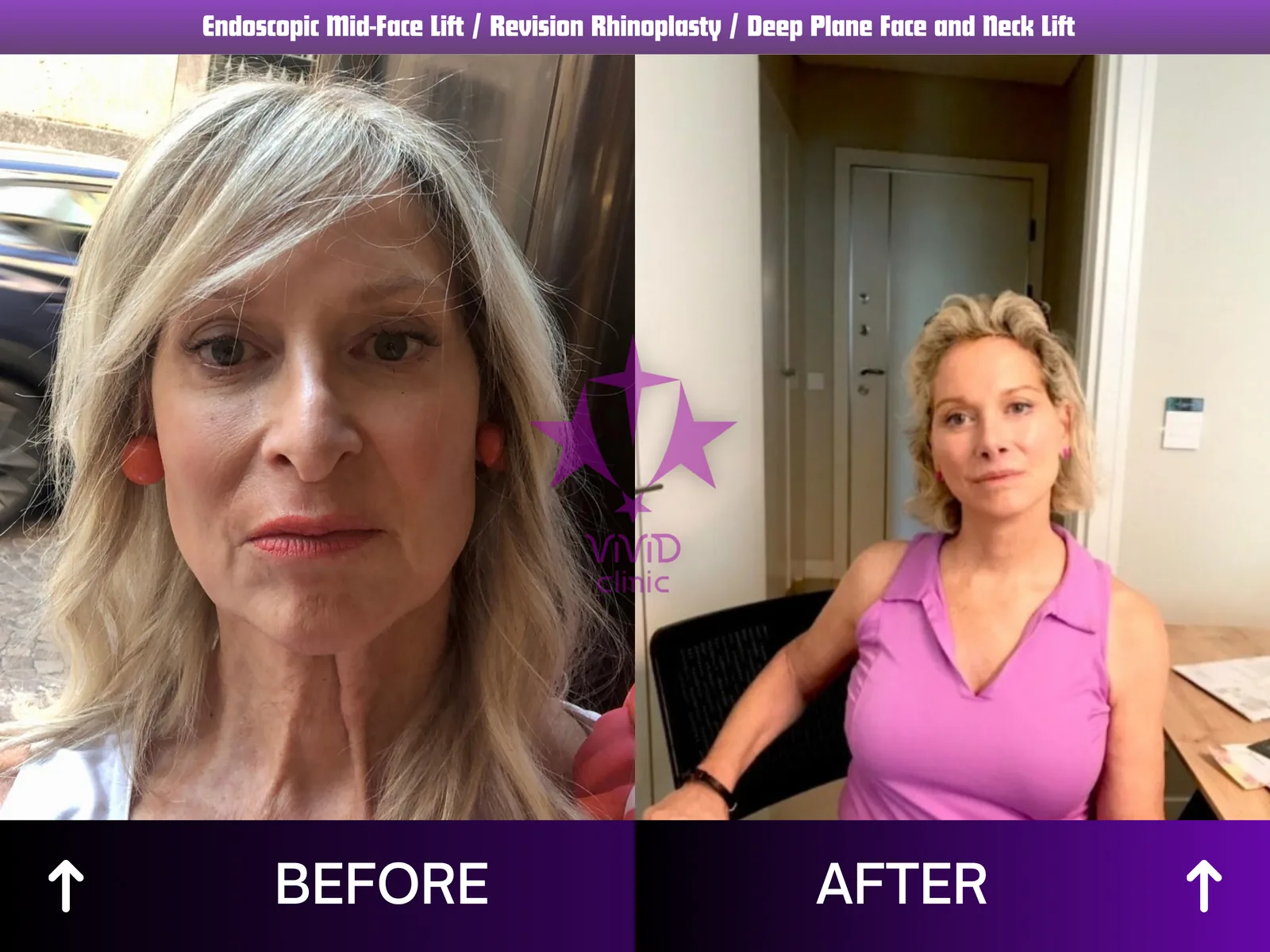
This is the only rung that addresses descent rather than compensating for it — see our account of facelift surgery. A deep plane facelift dissects beneath the fibrous SMAS layer and divides the retaining ligaments tethering the cheek to the bone, letting the malar fat pad be lifted back where it started. StatPearls puts it directly — failure to release those ligaments “severely limits correction of nasolabial folds, marionette lines, tear troughs, and jowls.” A skin-only or plication lift pulls at the periphery without releasing anything, so it does comparatively little for the fold.
For marionette lines, jawline and neck support matter as much as the face, which is why facelift and neck lift are usually planned together. Our before-and-after gallery shows how these read.
The two frontal comparisons below illustrate what surgical correction of the nasolabial folds and marionette lines looks like in practice, since both patients combined several procedures in one operation rather than treating a single fold in isolation.

What does not work
Facial exercises and “face yoga.” The most-cited study — a 20-week program in JAMA Dermatology, with 16 completers, no control group and a 41% dropout rate — found improved cheek fullness but no significant change in nasolabial folds at all. Exercise may plump a cheek slightly; it cannot undo an anatomical boundary or reverse descent.
Taping. Holding skin in place overnight changes nothing underneath; any morning difference is redistributed swelling.
Topical “collagen restoration.” Collagen creams cannot deliver collagen into the dermis — the molecule is far too large to cross intact skin. Topical collagen acts as a surface humectant — not the same thing as rebuilding what you have lost. Retinoids do influence dermal collagen, by signaling to your own cells, but even they change skin quality, not architecture.
Related Before and After Results at Vivid Clinic
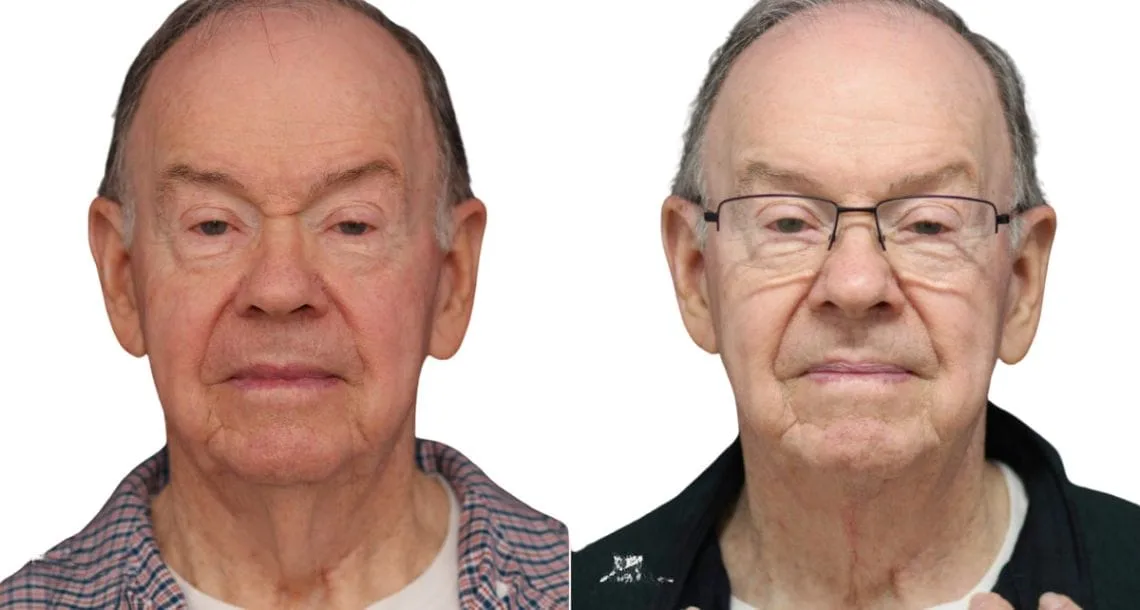
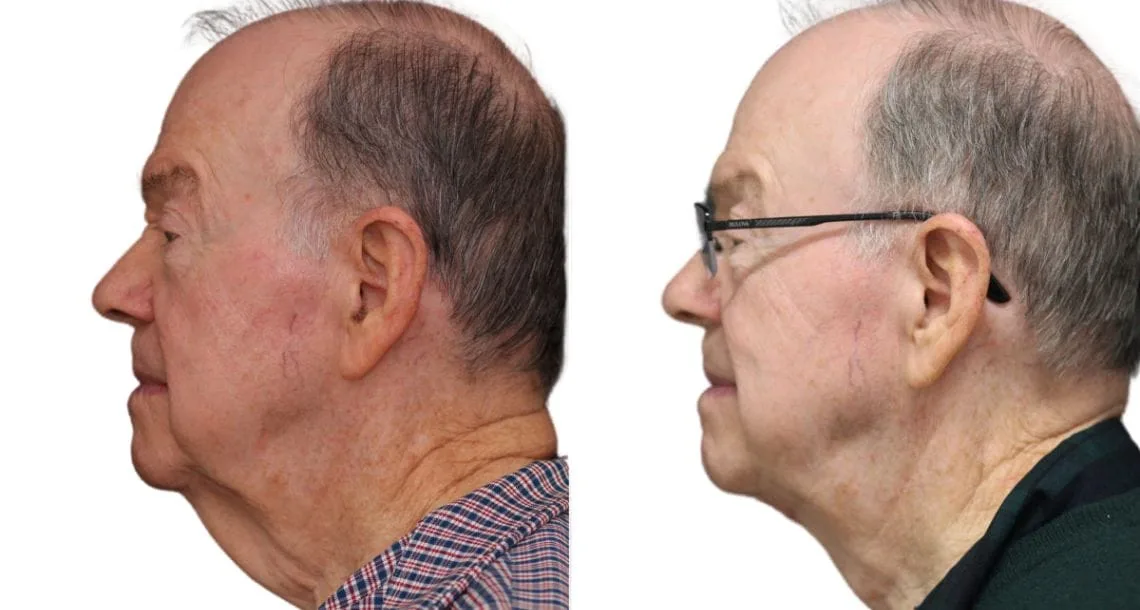
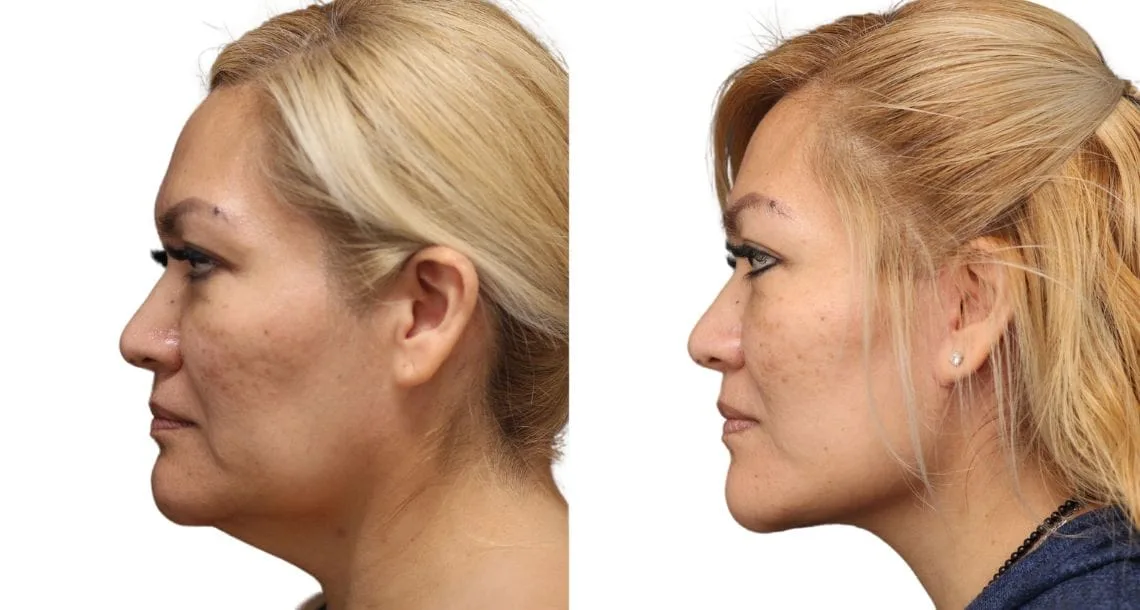
The photos below show real Vivid Clinic patients who had facelift — a related procedure, not non-surgical fold treatment itself — shared with their consent to show how our Istanbul team documents results. Ask during your free consultation to see cases that match your own treatment. Individual results vary. Browse the full Before & After Gallery.



Frequently Asked Questions
Can nasolabial folds be removed completely?
No, and they should not be. The fold is a normal anatomical boundary between cheek and upper lip, present in every face at every age, including in children. Treatment can make a deep fold shallower and restore the cheek support above it. But a face with no fold at all reads as overtreated — the flat, filled midface most people want to avoid.
What causes marionette lines?
Three things together. The jawline loses support as jowls form and the tissue in front of them hollows, so the mouth corner has no firm shelf beneath it. Bone and soft-tissue volume is lost around the chin. And the depressor anguli oris — a small muscle running from jaw to mouth corner that pulls it downward — becomes relatively dominant with age, the one component that responds to a muscle relaxant.
How do I fix nasolabial folds without surgery?
Restoring volume is the mainstay, usually with dermal filler — often placed higher over the cheekbone rather than in the fold itself, because rebuilding the support it sits against looks more natural than packing the crease. Fat grafting is an alternative using your own tissue, and energy-based tightening helps skin quality and mild laxity. None of them lifts tissue that has descended.
Does Botox help nasolabial folds?
Very little, and this is one of the commonest misunderstandings in facial aesthetics. Botulinum toxin relaxes muscles, so it works on lines created by movement, not on a structural boundary held by a fascial attachment — and relaxing the upper lip muscles enough to soften the fold would distort your smile. Its one role nearby is relaxing the depressor anguli oris, which releases the downward pull on the mouth corner.
Is filler in the nasolabial fold dangerous?
It carries a real but rare risk. The angular artery runs close to the fold and its course varies between individuals, making this one of the higher-risk regions for filler entering a vessel. Published guidance attributes about 13% of reported filler-related visual loss cases to nasolabial fold injection. It is uncommon but time-critical — ask your injector about hyaluronidase and their protocol.
When is surgery the right answer rather than filler?
When the problem is descent rather than deflation. If the fold is deep mainly because the cheek has deflated, added volume works well. If the tissue has slid downward — usually alongside jowling and a softening jawline — adding volume to an already displaced pad makes the face look heavier, not younger. A self-test: if pulling your cheeks up and outward in the mirror gives you the face you want, you are describing a lift, not a filler.
Not sure which rung of the ladder your face actually needs? Send photographs for a free online assessment and get a straight answer about what would and would not change — including when the honest answer is that nothing needs doing yet.