

Medically reviewed by Prof. Dr. Özgür Pilancı, Plastic, Reconstructive & Aesthetic Surgeon — August 2026
Quick answer (updated August 2026): Surgeons work with around twelve named types of noses — Roman (aquiline), Greek, Nubian, snub, button, hawk, fleshy, turned-up, bumpy, low-bridge, bulbous, and wide or crooked. Each is defined by three things: the profile of the bridge, the shape and angle of the tip, and the width of the base. Most real noses are combinations rather than textbook examples, and the largest published survey found the fleshy nose the most common.
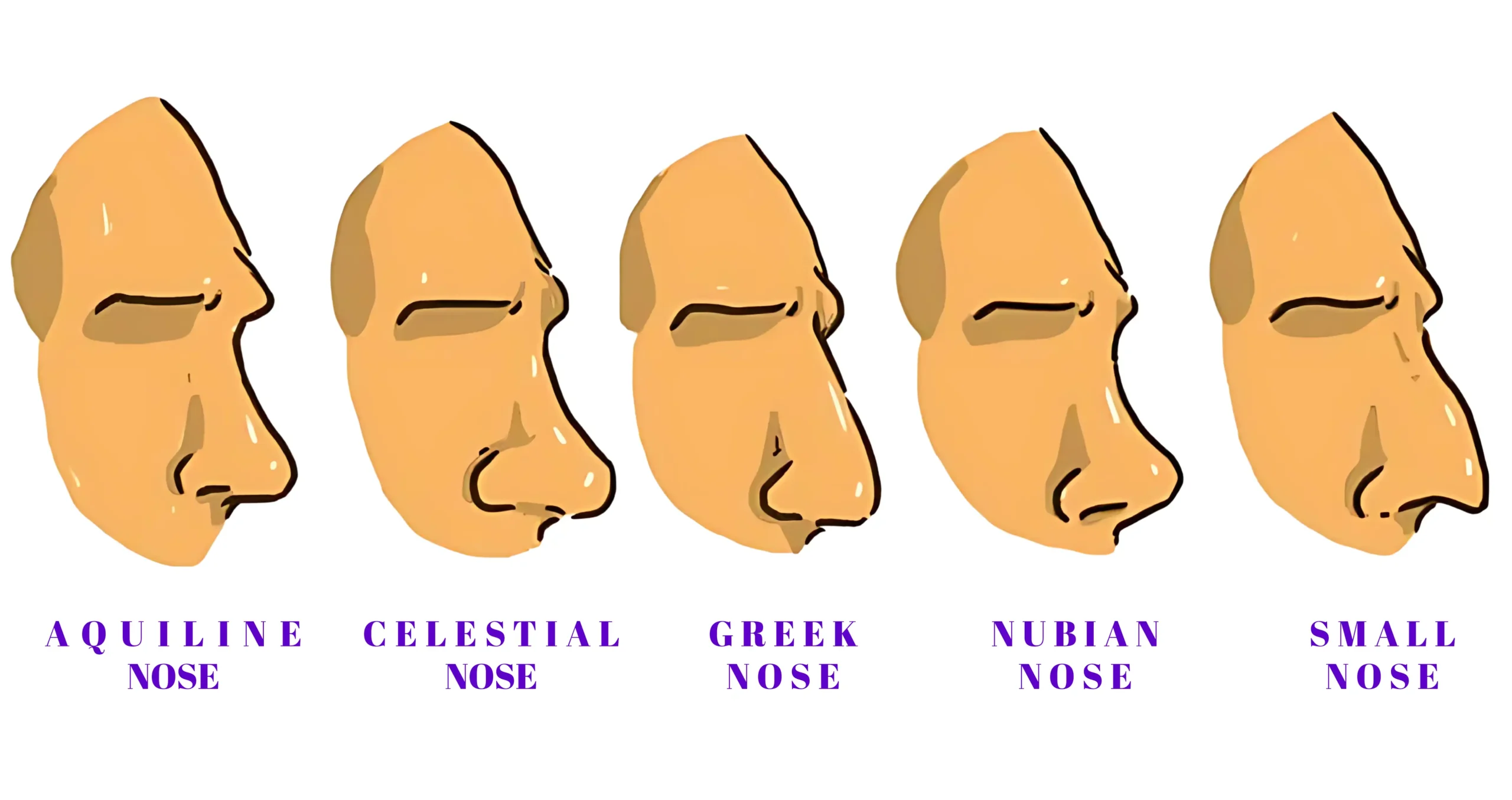
The words you need before you can name a nose shape
Most disagreements about nose shapes come from people describing different parts of the same nose. Five terms fix that. The radix is the root, the dip between your eyes where the nose begins. The dorsum is the bridge from radix to tip — bone for the top third, cartilage below. The tip is formed by paired cartilages meeting in the middle; how sharply they meet makes it look defined or round. The alae are the curved outer walls of the nostrils, and the span between their outer edges is your alar base width. The columella separates the two nostrils.
One angle matters more than any measurement: the nasolabial angle, between the columella and the upper lip. It decides whether a tip reads upturned, level or drooping. Surgical texts put the usual range at roughly 90–95 degrees in men and 95–110 in women — averages drawn largely from European reference samples, not targets. A few degrees changes the character of a whole face, which is why tip rotation is the most consequential decision in nose surgery.
Two things govern how all this reads from across a room. The upper third of the nose is bone and holds its shape; the lower two-thirds are cartilage and far more mobile. Over both lies a skin envelope that varies enormously in thickness — thick skin hides the structure underneath, thin skin reveals every contour, good and bad.
The 12 most common types of noses
There is no official register of nose shapes; sources count from six to twenty-one types of noses. The names below recur in surgical practice and describe most noses. Treat them as vocabulary, not boxes: most people are a combination, like a Greek bridge over a wide base. For each: what defines it anatomically, how it behaves in a face, and what rhinoplasty would and would not change. (Earlier guides cover parts of this ground: Roman and other nose shapes and Greek to Nubian nose types.)
Roman nose (aquiline nose)
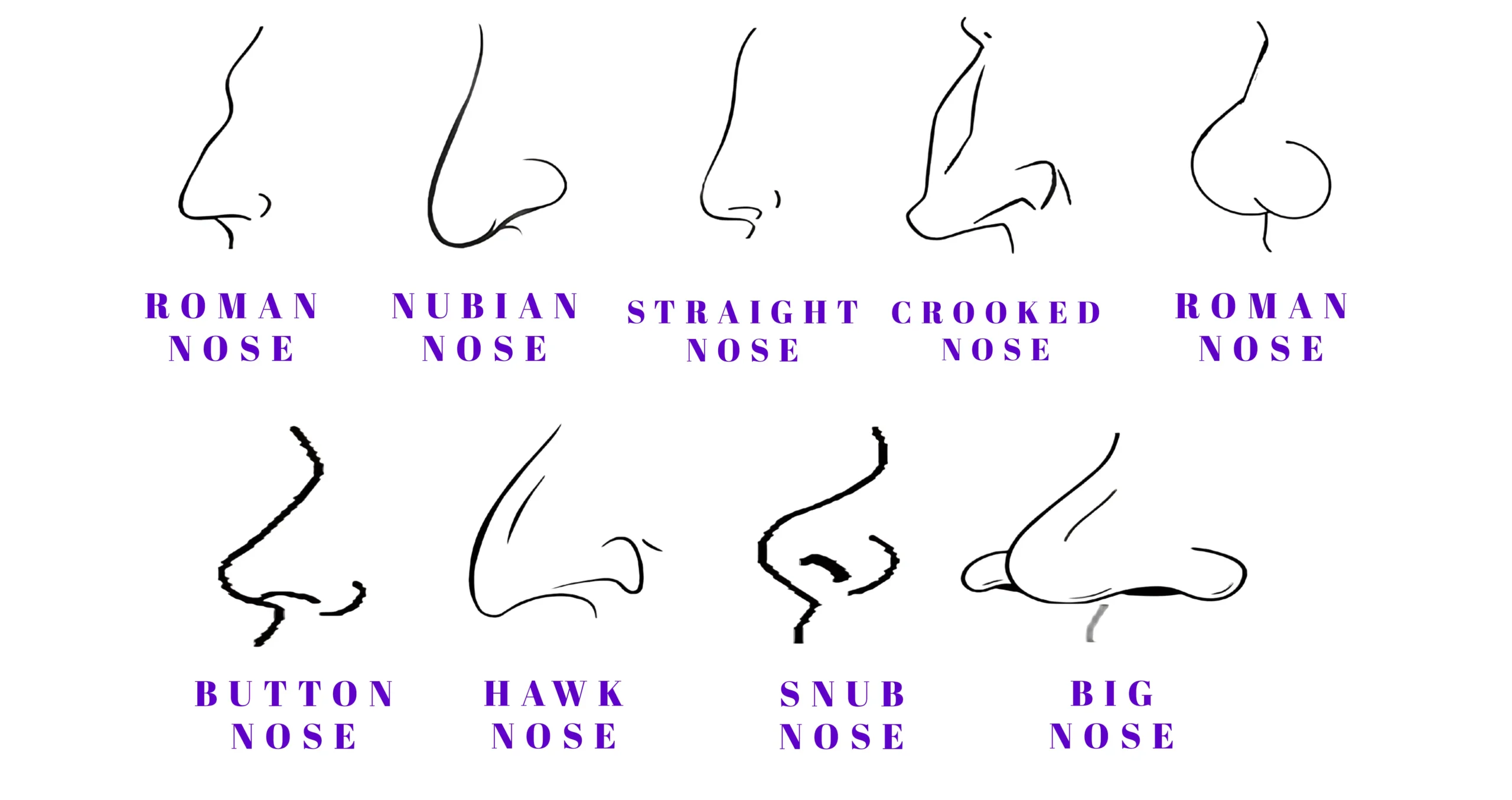
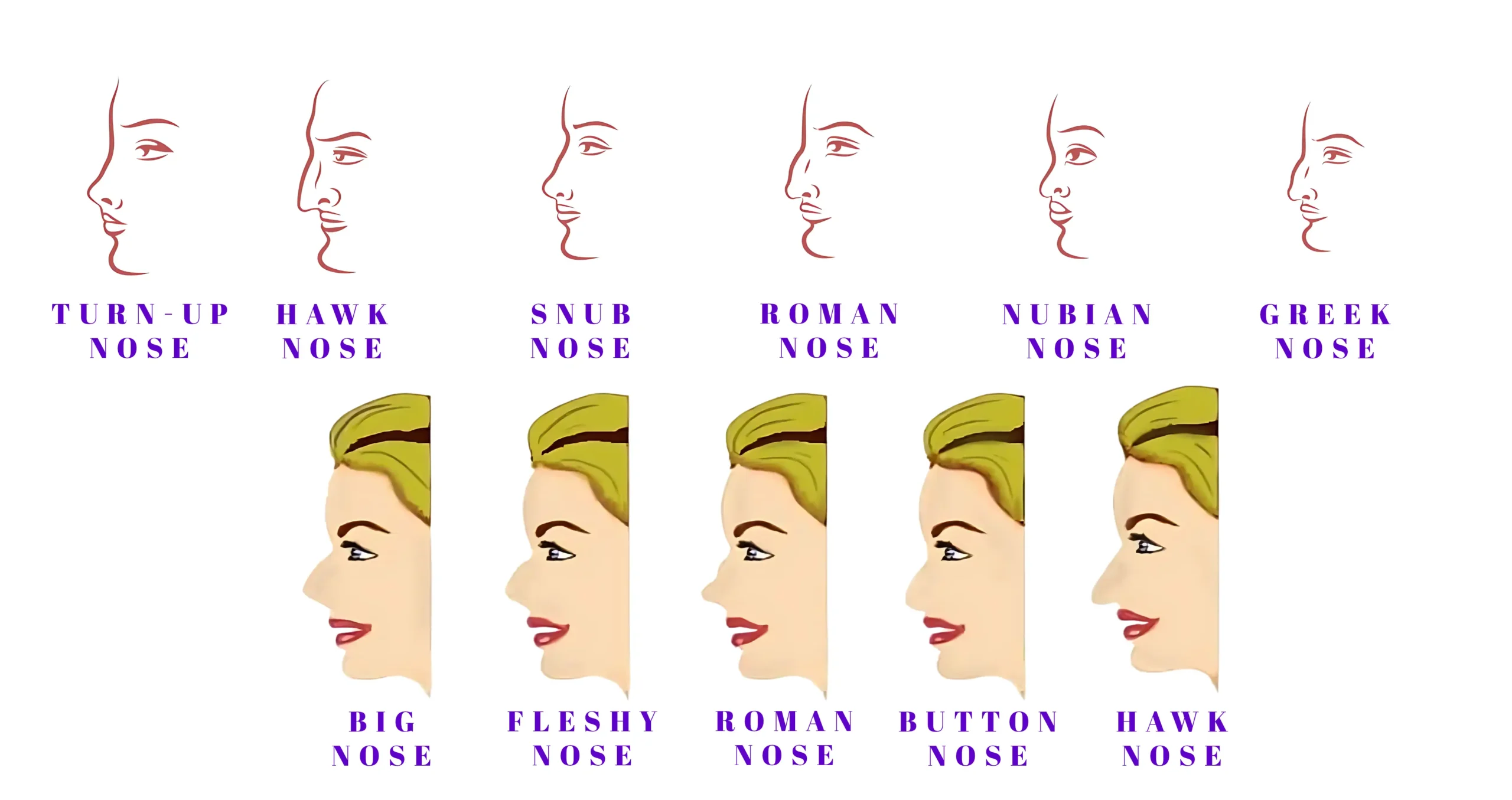
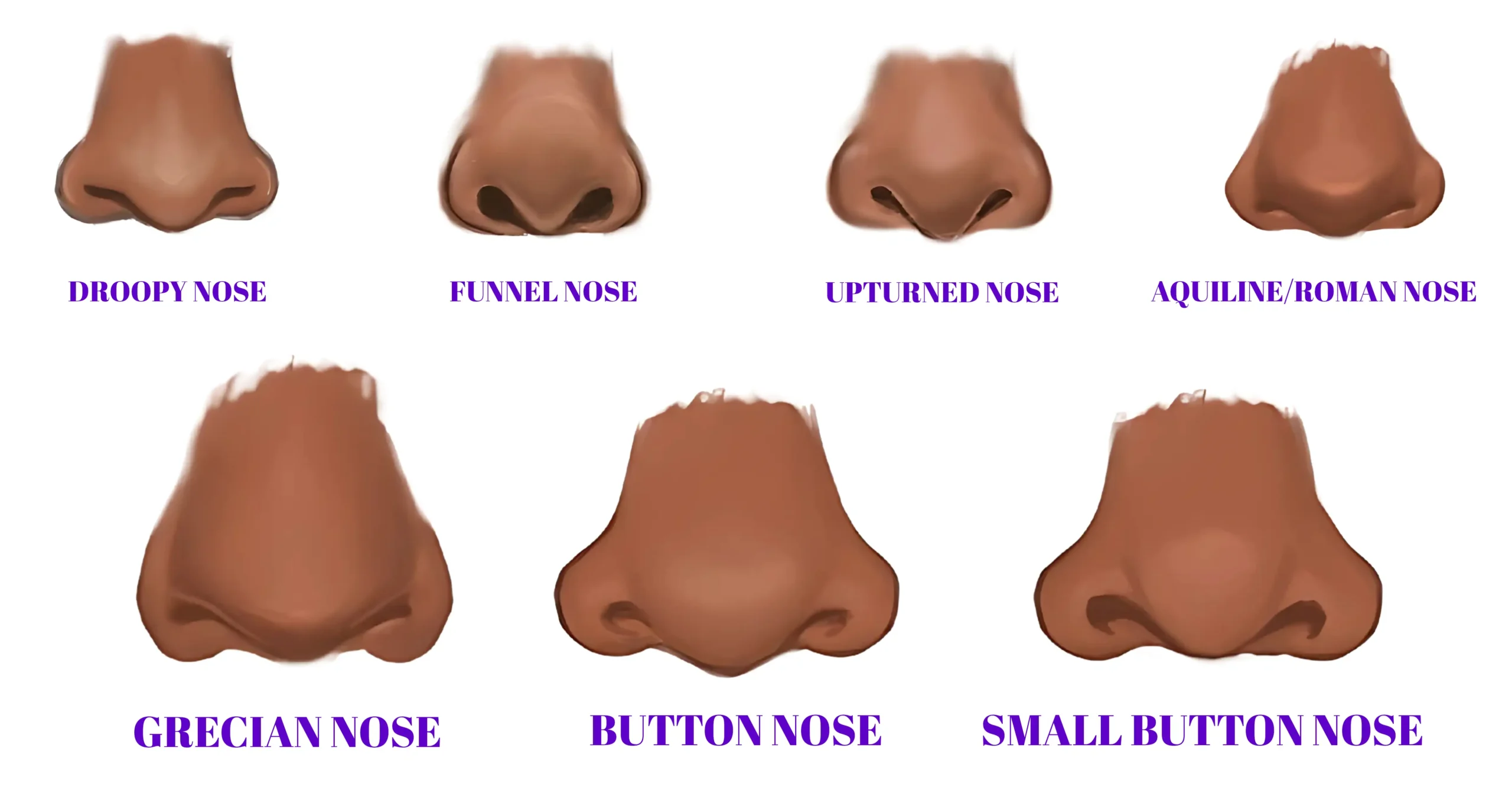
Defined entirely in profile: a convex bridge sloping gently down, a tip that stays level or turns slightly down, usually over a narrow base. It lengthens the middle third and suits strong brows and a projecting chin; on a face with neither it reads heavier. Reducing the hump softens the profile reliably, and preservation techniques lower the whole bridge rather than filing it. Surgery will not narrow a wide base, and over-reduction leaves a scoop that fights a strong jaw.
Greek nose (straight nose)
The bridge runs dead straight from radix to tip, over a narrow base, with a tip that neither rotates up nor drops. It is named for classical sculpture, where the nose continues the forehead line with almost no dip at the radix — a convention rarely seen in living faces. Straight noses are the reference other shapes get compared against, not usually a reason for surgery. As a goal, the honest limit is that a straight bridge can be built from a convex one but not conjured out of short nasal bones.
Nubian nose
A long bridge with a wide, horizontally set base, often with lower dorsal height and less tip projection. Length and width read together, which separates it from a nose that is merely wide. It sits comfortably with wide-set eyes and fuller lips, and small changes alter the whole face. Surgery usually means tip refinement with cartilage grafts, sometimes a little dorsal augmentation. The pitfall is over-narrowing the base: it looks pinched and can genuinely reduce airflow.
Snub and button noses
Short, small and softly rounded, with modest projection and a tip that reads as a curve rather than a point. The button nose is the smaller, rounder version, and the shape behind most searches for cute noses. Anatomically: a short bridge, thick soft tissue over the tip, tip cartilages meeting in a broad curve. It shortens the middle third and reads younger, working best where the other features are small too. It is also the most requested and most over-delivered result in nose surgery — a nose smaller than the face it sits in reads as operated.
Hawk nose
The most pronounced convex profile: a sharply curved bridge with a tip that hooks downward. The tip separates a hawk nose from a Roman one — the Roman tip stays level, the hawk tip drops. It can dominate a profile while looking far less prominent from the front. Correction is two moves at once: reducing the convexity, and rotating the tip up to open the nasolabial angle. Rotation is unforgiving — an over-rotated tip showing too much nostril is far harder to reverse than a hump is to reduce.
Fleshy nose
The most common shape of all, and the least discussed. In the largest published survey of nose morphology — Abraham Tamir’s analysis of 1,793 noses, reported in the Journal of Craniofacial Surgery in 2011 — it accounted for roughly 24 per cent of the sample. It is fuller and broader, with a wide tip, generous soft tissue and little bone or cartilage definition showing through the skin. It ages relatively well, because thick skin conceals changes that show on thinner-skinned noses. It is also the hardest shape to change: thick skin does not shrink onto reduced cartilage, results are subtler than patients expect, and swelling can take 12 to 18 months to settle. What works is structural support for the tip, not taking tissue away.
Turned-up nose (celestial nose)
A concave or scooped bridge and a tip rotated upward, so the nasolabial angle sits above the usual range and the nostrils show from the front. In the same survey this was the most common European profile, at around 22 per cent. It reads as open and youthful and can soften a strong jawline. Counter-intuitively, de-rotating a turned-up nose is harder than rotating a drooping one, because bringing a tip down means adding structure rather than removing it.
Bumpy nose
An irregular dorsal contour: a small hump followed by a dip, or several changes of direction along the bridge. Often the residue of an old fracture, and almost entirely a profile phenomenon — invisible from the front, obvious side-on. Small bony irregularities can be smoothed by rasping, and a single dip camouflaged with filler. The caveat is skin: on thin skin, every irregularity left after surgery still shows, and so does any new one.
Low-bridge nose
Common across East and South East Asian populations, and seen widely elsewhere: a lower radix and dorsal height, shorter nasal bones, softer tip cartilage under thicker skin, less projection, and a base wide relative to the bridge. The middle third of the face reads flatter and catches less shadow. Surgery here is predominantly augmentation rather than reduction — adding bridge height and tip projection with the patient’s own cartilage or an implant, a different risk profile carrying complications such as implant migration, extrusion and infection. Standard texts also note the published “ideal” angles are lower in Asian, Latin American and African patients than the European figures usually quoted.
Bulbous nose
Here the defining feature is the tip alone: wide and round rather than defined, because the tip cartilages are broad and splayed and the skin over them is thick, whatever the bridge is doing. A bulbous tip pulls the eye to the centre of the face, and it is what patients most often point to in a consultation photograph. Suture techniques that narrow and align the tip cartilages are the usual approach, with skin thickness setting the ceiling. One non-cosmetic note: a nose that has become progressively bulbous, thickened and reddened in an adult can be rhinophyma, a form of rosacea — one for a doctor, not a surgeon.
Wide and flat noses
A broad base, a low and wide bridge, or both — and the distinction matters, because width at the bridge and width at the nostrils are different problems needing different operations. Wide noses sit naturally with wide-set eyes and broad cheekbones, and the same nose can look wide on one face and proportionate on another. Bony width is narrowed with lateral osteotomies; nostril width by alar base reduction, which leaves a fine scar in the alar crease. Of everything here, that is the change most likely to affect breathing, because it narrows the external nasal valve.
Crooked and deviated noses
The nose deviates from the facial midline, often in a C or S shape, usually after an injury and very often alongside a deviated septum inside. It reads as facial asymmetry even when the rest of the face is symmetrical, which is why it bothers people out of proportion to its size. Straightening one is among the most demanding operations in the field, needing septal work, osteotomies and grafts to hold the position. It carries the highest revision rate here, because cartilage has memory and can drift back — and it is the shape where surgery is most often functional as well as cosmetic.
“Aquiline”: what the word actually means
Aquiline means curved like an eagle’s beak. It comes from the Latin aquilinus, “of or like an eagle”, from aquila, eagle, entering English in the 1640s applied specifically to noses. The broader senses — an aquiline profile, aquiline features, an aquiline face — came later and describe an impression rather than a measurement: lean, angular, with a prominent convex-bridged nose.
In practice, aquiline and Roman noses are the same thing. Some writers reserve “aquiline” for a more pronounced curve, but there is no agreed dividing line. Both describe a bridge that is convex in profile, and neither says anything about width, tip shape or nostrils.
The word carries history worth naming plainly. In the nineteenth and early twentieth centuries, physiognomy and race science used nasal shape — aquiline profiles especially — to sort people into invented hierarchies and attach character to appearance. None of it had an evidentiary basis then and none has emerged since. Nose shape predicts nothing about personality, ability or origin.
How to work out what type of nose you have
Look at three views, not one. Most people judge their nose in the mirror, which shows only the least informative one.
Profile. Photograph yourself side-on, head level, not smiling, in flat even light. The bridge tells you almost everything: convex means Roman, aquiline or hawk, depending on how sharply it curves and where the tip sits; dead straight means Greek; scooped means turned-up; irregular means bumpy. Don’t smile — a small muscle pulls the tip down, making almost any nose look more drooping than it is.
Front. Compare two widths, the bridge and the base. Then the tip: a defined point of light, or one round highlight? A round highlight means a bulbous tip. As a rough reference, the base is often close to the distance between the inner corners of the eyes.
Base. Tip your head back and photograph from below. This shows nostril shape, the columella, and whether the two sides of the tip match. Asymmetries invisible from the front are obvious here — the view surgeons use most and patients look at least.
What actually determines your nose shape
Genetics, mostly, and more specifically than you might expect. A genome-wide study led by University College London researchers, published in Nature Communications in 2016, analysed nearly 6,000 volunteers of mixed ancestry and linked individual genes to individual features: GLI3 and PAX1 to nostril breadth, DCHS2 to how pointed the tip is, RUNX2 to the width of the bridge. Nose shape is not one inherited trait but a stack of them, which is why siblings can share a bridge and not a tip.
Climate has probably contributed too, though less than popular accounts claim. A 2017 study in PLOS Genetics measured seven nasal traits across four populations and found only two — nostril width and alar base width — diverging faster than genetic drift alone would explain, correlating with temperature and humidity: wider in warm, humid climates, narrower in cool, dry ones. The authors called it “a simplified explanation of a very complex evolutionary history”, noting the climate signal is weak next to skin pigmentation.
That caution matters for how heritage gets discussed online. Nose shapes vary far more within any population than between populations, so no shape belongs to a group and no group has a shape. Family resemblance is real and worth valuing; broad generalisations about ancestry and noses are not.
Age keeps changing all of it. The nose does not gain bone in adulthood, but supporting cartilage and ligaments weaken over decades, so the tip descends and the nose looks longer and slightly more convex. Your parents’ profiles are a fair preview of your own.
When a nose shape is a breathing problem, not a cosmetic one
Shape and function are related, but not the way people assume. A wide nose is not a better airway and a small nose is not a worse one. What obstructs breathing is internal structure: a deviated septum, collapse of a nasal valve, or enlarged turbinates.
Deviated septums are near-universal and mostly harmless — Cleveland Clinic puts it at roughly eight in ten people having a septum at least slightly off-centre, most of whom never notice. It becomes a clinical issue when it produces symptoms, which Mayo Clinic lists as blockage of one or both nostrils, frequent nosebleeds, noisy breathing during sleep, or consistently needing to sleep on one side to breathe. The internal nasal valve is the other common culprit: it is the narrowest part of the airway, so a small change in its angle has an outsized effect on airflow.
See a doctor rather than a cosmetic surgeon if a blocked nostril does not respond to treatment, you have frequent nosebleeds, breathing through one side has changed noticeably, or your nose changed shape after an injury. Get urgent care for a suspected broken nose — the window for resetting it without a full operation is short.
Where both matter, they are usually addressed in one operation: the septum straightened and the airway supported while the external shape is changed. Ask how your surgeon plans to protect the airway, especially if narrowing the base or bridge is part of the plan — narrowing a nose and preserving its function are competing goals, and the balance should be a stated decision rather than an accident.
Should you change it? An honest answer
Often the answer is no, and that is a legitimate outcome of a consultation, not a failure of one.
The most common reason a nose looks too large is that something else is small. Chin projection in particular changes how a profile reads: a nose in normal proportion can look prominent against a receding chin, and assessing the two together is standard practice. So is checking the nose against the rest of the face — the middle third of its height, the central fifth of its width — before assuming the nose needs to move. Facial balancing is the broader way of thinking about this, and it frequently concludes the nose was never the issue. Vivid Clinic has no dedicated chin service page, so raise chin projection at consultation and see the face aesthetics overview.

If the concern is a small contour irregularity, understand the non-surgical option accurately. The American Society of Plastic Surgeons describes liquid rhinoplasty as able to smooth uneven areas and add subtle shape, lasting six months to a year, and notes explicitly that filler cannot make a nose smaller, because it only adds volume. ASPS also flags the serious risk: accidental injection into a blood vessel can cause skin loss and, rarely, blindness.
For scale, the ISAPS 2024 global survey recorded around a million rhinoplasties worldwide, down roughly 10 per cent year on year, 60 per cent of them in patients aged 18 to 34. It is a common operation, but the trend is not upward — “everyone is having it” is not a reason.
Finally, the question the shape lists never answer honestly: which nose is best? There isn’t one. The neoclassical proportions still quoted in surgical texts came from European sculpture and do not transfer across faces or populations, and a nose that is ideal on paper can look wrong on the person wearing it. What a careful surgeon works toward is proportion within your face and a result nobody can identify as surgery. Wanting to keep your nose is not a failure of nerve — it is frequently the better decision.
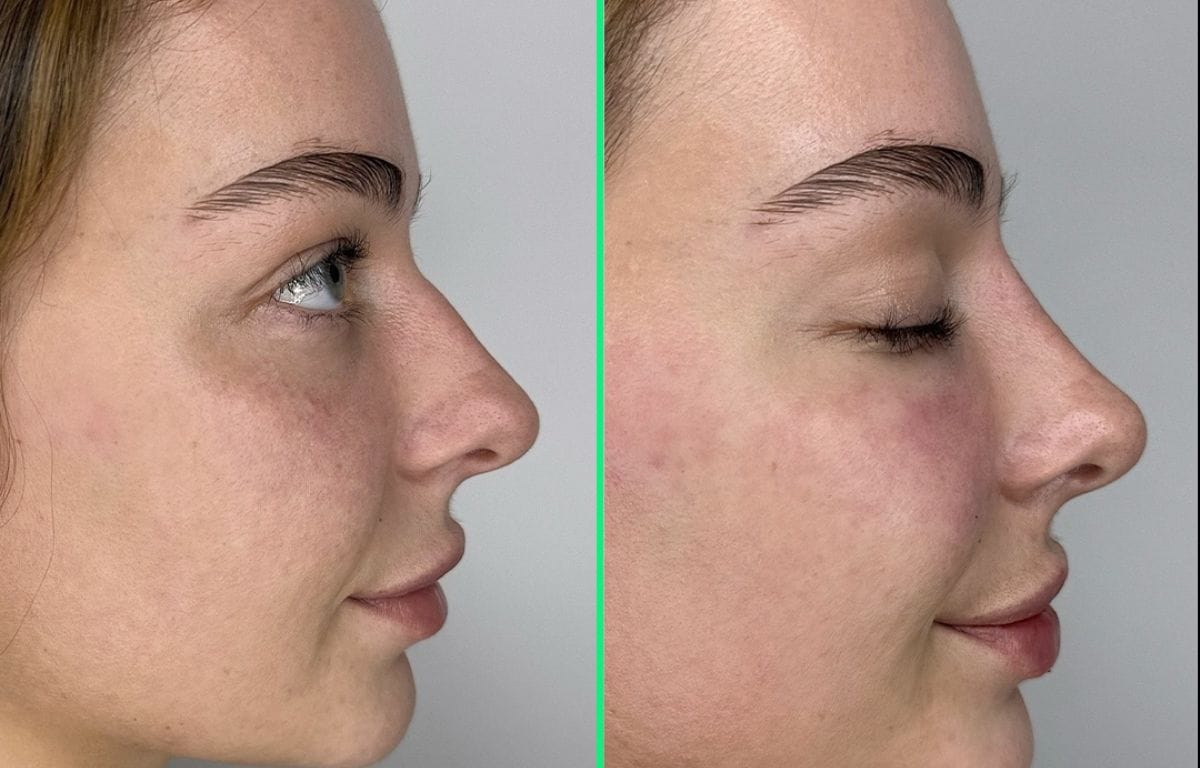
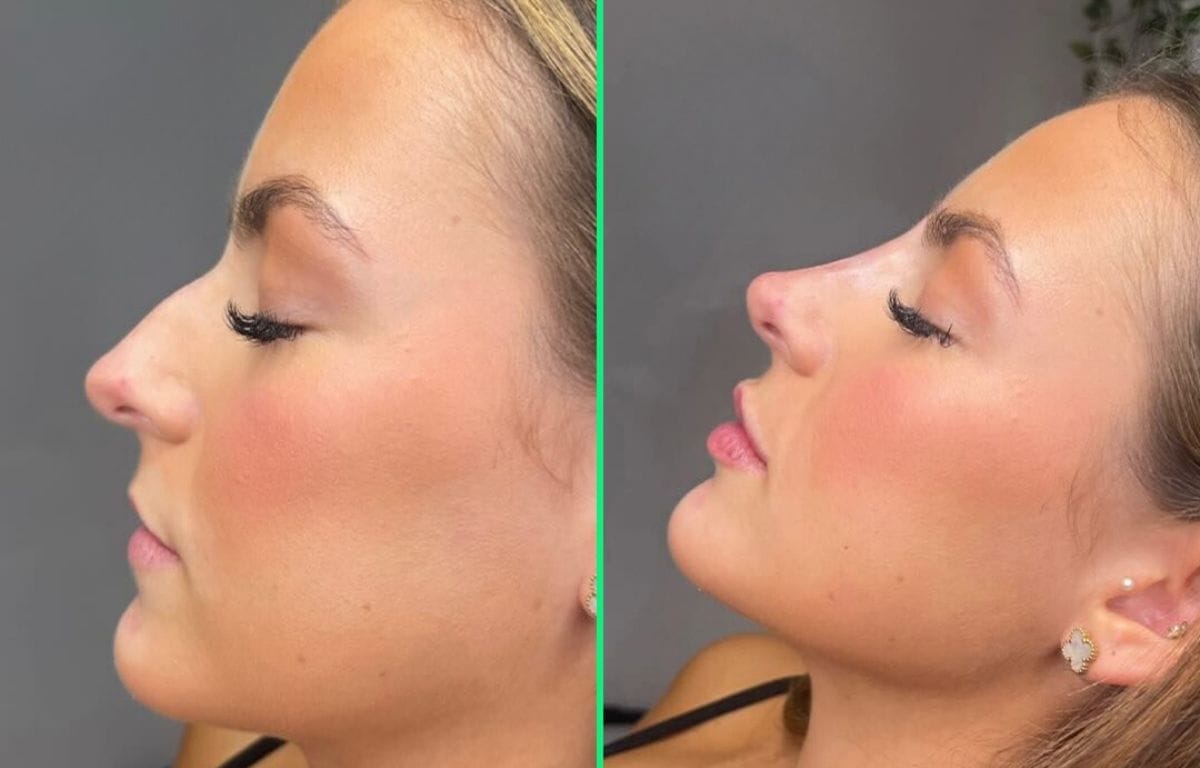
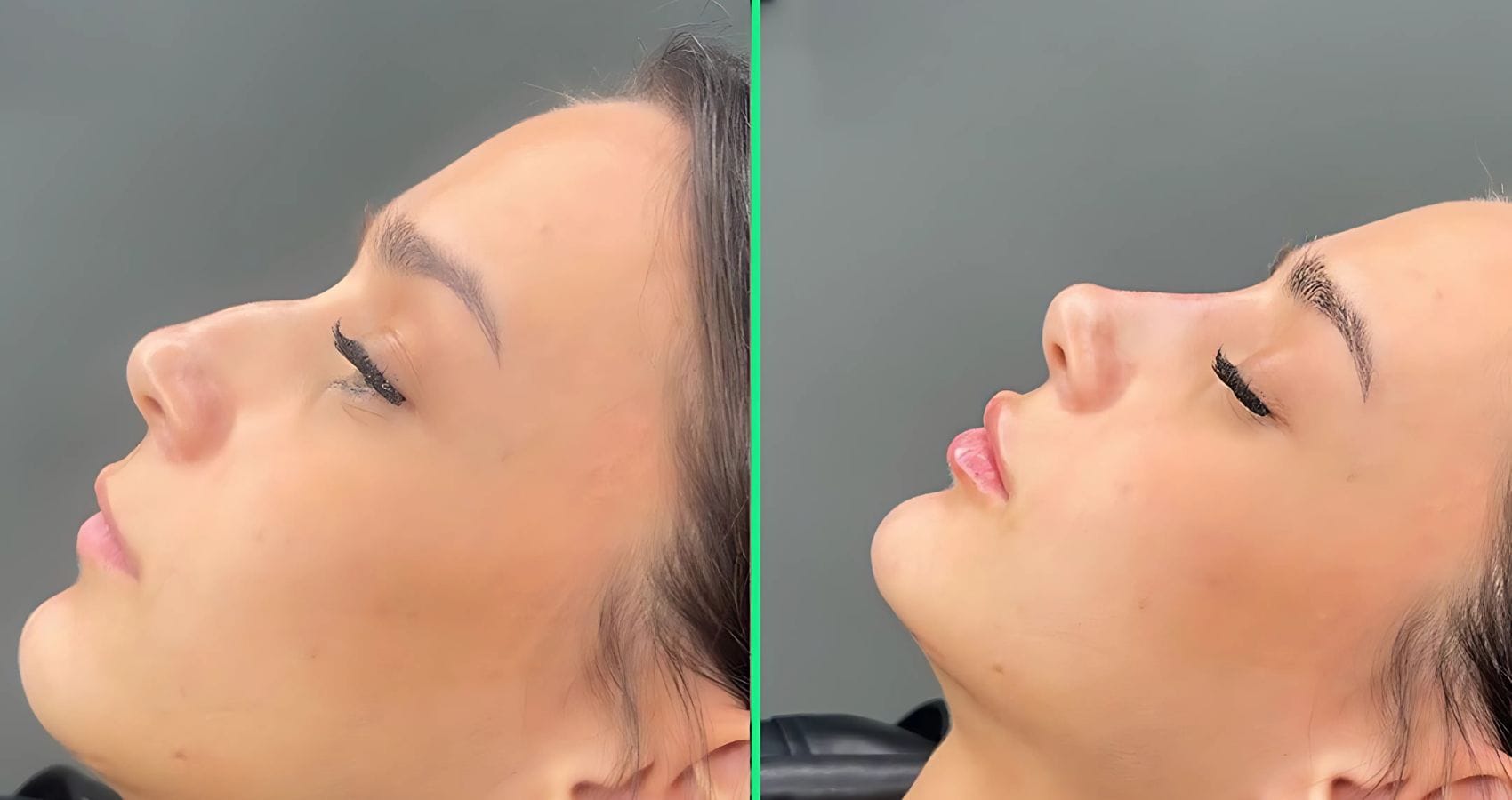
Rhinoplasty Before & After Results at Vivid Clinic



Frequently Asked Questions
What are the different types of noses?
The twelve names most widely used are the Roman (aquiline), Greek, Nubian, snub, button, hawk, fleshy, turned-up, bumpy, low-bridge, bulbous, and wide or crooked nose. There is no official list — sources count from six to twenty-one kinds of noses. Each is defined by bridge profile, tip shape and base width, and most people are a mixture.
What is an aquiline nose?
An aquiline nose has a convex, curved bridge. The word comes from the Latin aquilinus, “like an eagle”, and entered English in the 1640s describing exactly this shape. It is used interchangeably with “Roman nose”. Aquiline features, or an aquiline face, describe the broader impression: lean and angular with a prominent bridge.
What is the most common nose shape?
The fleshy nose — fuller and broader, with a wide tip and generous soft tissue. In Abraham Tamir’s analysis of 1,793 noses, the largest published survey of nose morphology, it accounted for about 24 per cent. Two caveats: it looked mainly at European and Israeli faces, and no study has repeated it at larger scale.
Can rhinoplasty change any nose shape?
Rhinoplasty can change size, bridge profile, tip shape, nostril width and asymmetry, and correct breathing problems from structural issues such as a deviated septum. What it cannot do is exceed what your own tissue allows. Skin thickness is the main limit: thick skin conceals refinement, thin skin reveals imperfection. Your surgeon should say which limits apply to you.
Can you change your nose shape without surgery?
Partly. Dermal filler can smooth a small dip, camouflage a minor bump or add a little bridge height, lasting six months to a year. It cannot make a nose smaller, because filler only adds volume, and it cannot refine a tip. ASPS warns that injection into a nasal blood vessel can rarely cause skin loss or blindness — not a treatment to choose on price.
Not sure your nose is the feature that would actually change your face? That is the right question, and better answered by looking at a whole face than one shape name. Browse real outcomes in our before and after gallery, read about rhinoplasty at Vivid Clinic, or send photographs for a free online assessment — a surgeon will tell you honestly what surgery would and would not change, including if the answer is that your nose is fine.